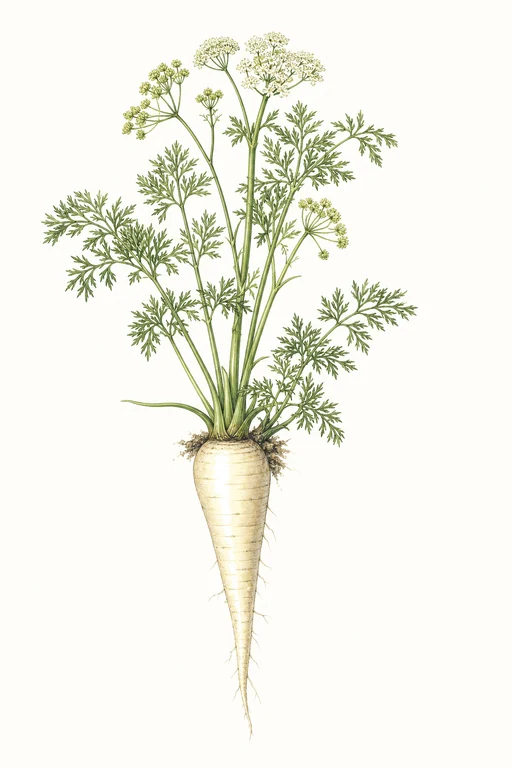
White Satin
Carrot
🌱 75d to harvest
Taproot
Silky and luminous, White Satin carrots mature into long, tapered roots with a creamy white finish and a faint, satiny sheen that…
Crop Dates
| Milestone | Date |
|---|---|
| Start Indoors | Direct Sow |
| Last Frost | Jan 1st |
| Transplant / Sow Outdoors | Jan 1st |
| Harvest Begins | Mar 17th |
| Harvest Ends | Dec 31st |
Crop Details
| Trait | Value |
|---|---|
| Days to Maturity | 75 |
| Sun Requirements | Full Sun |
| Growth Habit | Taproot |
| Support Needed | None |
| Planting Depth | Normal |
| Germination Temp (°F) | 60 |
| Min Soil Temp (°F) | 45 |
| Min Night Temp (°F) | 28 |
| Harden Off (days) | Not Required |
Recommended Companions
Frequently Asked Questions
What pest or disease commonly affects carrots (Daucus carota) like ‘White Satin,’ and what should I do?
Carrot flies and their larvae can bore into the roots, often starting with wilting or a damaged root crown near the soil line. Use row cover immediately after sowing and keep it on until harvest, then remove any infested plants to break the life cycle; if you see eggs/early damage, re-cover the bed promptly. Fungal problems like leaf blight are more likely in persistent damp conditions—space rows to keep foliage dry and avoid overhead watering.
How often should I water ‘White Satin’ carrots during the main growing period?
During active root bulking (roughly from a few weeks after thinning until harvest), keep the top 1–2 inches of soil consistently moist—typically about 1 inch of water per week, adjusted for heat and rainfall. Water deeply, then let the surface slightly dry before the next watering to reduce fungal leaf issues while still preventing the roots from drying out. Irregular moisture can cause cracking and forked roots in Daucus carota.
How do I tell when ‘White Satin’ carrots are ready to harvest?
Start checking at about 70–75 days: look for the shoulder of the carrot showing at the soil surface and feel for a firm, well-formed root beneath. White Satin is a small-to-medium carrot—harvest once the roots reach a thumb-to-finger thickness so they stay sweet and tender. If you wait too long, the roots can become tougher and more likely to develop a woody center.