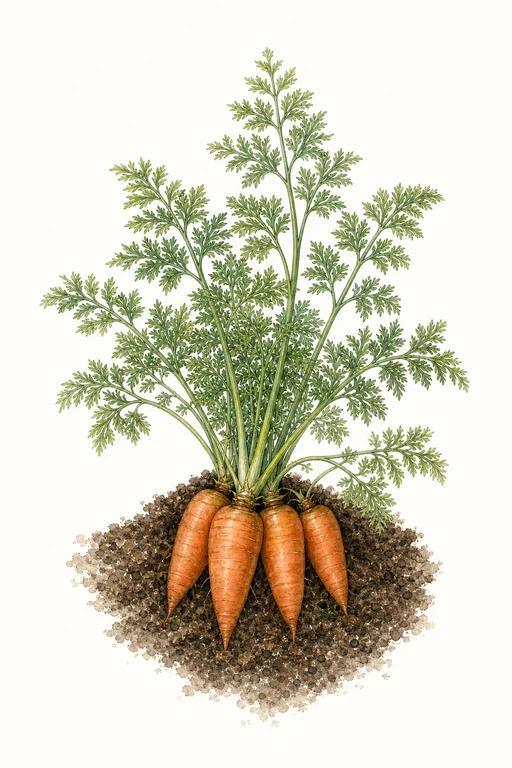
Carson Hybrid
Carrot
🌱 75d to harvest
Taproot
Sweet, earthy fragrance rises as soon as the Carson Hybrid tops are brushed—then the roots reveal a rich, honeyed flavor with a t…
Crop Dates
| Milestone | Date |
|---|---|
| Start Indoors | Direct Sow |
| Last Frost | Jan 1st |
| Transplant / Sow Outdoors | Jan 1st |
| Harvest Begins | Mar 17th |
| Harvest Ends | Dec 31st |
Crop Details
| Trait | Value |
|---|---|
| Days to Maturity | 75 |
| Sun Requirements | Full Sun |
| Growth Habit | Taproot |
| Support Needed | None |
| Planting Depth | Surface |
| Germination Temp (°F) | 75 |
| Min Soil Temp (°F) | 50 |
| Min Night Temp (°F) | 35 |
| Harden Off (days) | Not Required |
Recommended Companions
Frequently Asked Questions
What pest or disease most commonly affects Daucus carota (carrot) during summer, and how can I control it?
Carrot rust fly (and its larvae tunneling in roots) is a common summer problem for carrots. Use a fine insect net/row cover over the bed as soon as seedlings emerge, keep weeds down, and avoid letting the soil stay bare and undisturbed—remove infested roots promptly so larvae don’t continue feeding. If you’re seeing fly activity, re-cover immediately after any access and don’t replant the same spot without a break.
How often should I water during the main growing phase so my Royal Chantenay-type carrots form straight roots?
From emergence through bulking (about weeks 3–10), keep the top 1–2 inches of soil evenly moist—about 1 inch of water per week, adjusted for heat, with smaller, more frequent waterings in hot weather. Letting the soil swing from very dry to very wet can trigger cracking or misshapen roots; aim for steady moisture without waterlogging. Mulch lightly to reduce drying on the soil surface, but keep the crown area from sitting in puddles.
How do I tell when my Carson Hybrid carrots are ready to harvest after about 75 days?
Start checking around day 70: gently pull one plant and look for the shoulder—when it’s close to the variety’s expected diameter and the root color is fully developed, they’re ready. Harvest when roots are firm and crisp, not soft or overly hairy, and avoid leaving them too long in warm soil. For the best texture, harvest after a light watering so the soil loosens, then pull straight up and remove foliage to keep roots from drying.