
Connecticut Field
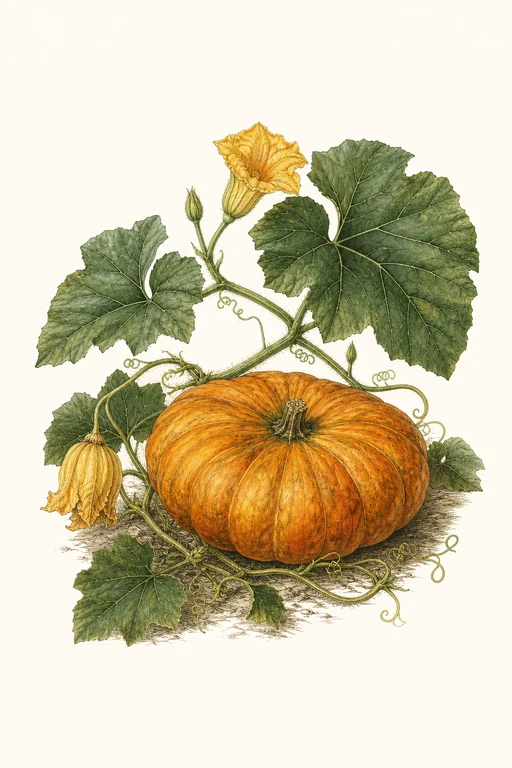
Sink your senses into the rich, sun-warmed aroma and dense, sweet flesh of Connecticut Field pumpkin—an heirloom-style favorite prized for its deep, old-fashioned flavor. At maturity, the fruit develops a sturdy, thick-walled shell with a handsome, flattened silhouette and a warm, orange-gold interior that turns velvety when roasted. Grow it for hearty fall displays and reliable harvests that shine in classic pumpkin purées, pies, and robust sauces.
Crop Dates
| Milestone | Date |
|---|---|
| Climate | Frost-Free Climate |
| Growing Approach | Continuous Production |
Crop Details
| Trait | Value |
|---|---|
| Days to Maturity | 110 |
| Sun Requirements | Full Sun |
| Growth Habit | Vine |
| Support Needed | Trellis |
| Planting Depth | Normal |
| Germination Temp (°F) | 85 |
| Min Soil Temp (°F) | 65 |
| Min Night Temp (°F) | 55 |
| Harden Off (days) | 10 |
Recommended Companions

Frequently Asked Questions
What are common pests or diseases for Cucurbita pepo (Connecticut Field squash), and how do I control them?
How often should I water Cucurbita pepo during the main growing phase (flowering through fruit set)?
Sink your senses into the rich, sun-warmed aroma and dense, sweet flesh of Connecticut Field pumpkin—an heirloom-style favorite prized for its deep, old-fashioned flavor. At maturity, the fruit develops a sturdy, thick-walled shell with a handsome, flattened silhouette and a warm, orange-gold interior that turns velvety when roasted. Grow it for hearty fall displays and reliable harvests that shine in classic pumpkin purées, pies, and robust sauces.
Sowing Tips

Soil Temperature
Direct sow or transplant when soil at planting depth holds 65°F for reliable germination and early growth.

Direct Sow Preferred
Sensitive roots — does not transplant well. If starting indoors, use biodegradable pots and disturb roots as little as possible when moving outdoors.
Expert Note

For best success, direct-sow when nights are reliably warm and the soil is fully warmed; if starting indoors for an earlier start, disturb roots as little as possible at transplant.