SproutSmart
SproutSmart Intelligent Garden Sowing

Cora

Celeriac
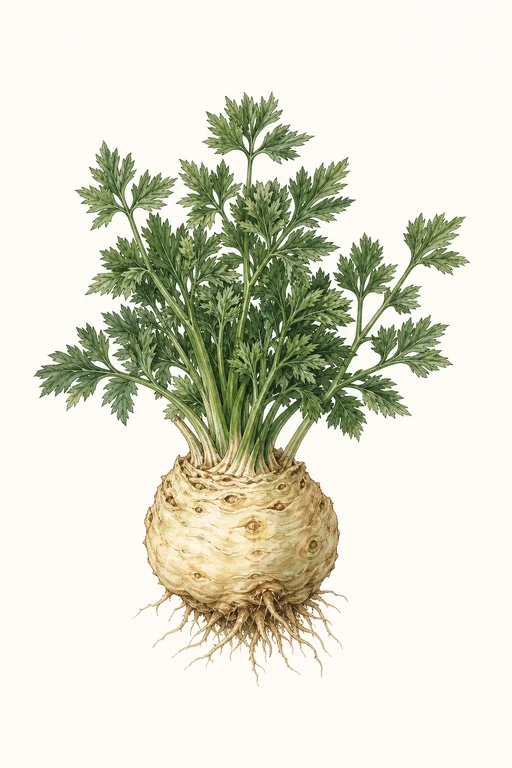
Botanical illustration of Cora
🌱 100d to harvest Upright

Cora celeriac brings a richly aromatic, cellar-sweet flavor with a clean, nutty edge—its knobby crown holds a creamy, tender bite…

Planting Schedule

Add Cora to your garden to build a schedule and get reminders.

Crop Dates

MilestoneDate
Start IndoorsOct 23rd
Last FrostJan 1st
Transplant / Sow OutdoorsDec 25th
Harvest BeginsApr 4th
Harvest EndsDec 31st

Crop Details

TraitValue
Days to Maturity100
Sun RequirementsPart SunPartial sun
Growth HabitUpright
Support NeededNone
Planting DepthNormal
Germination Temp (°F)70
Min Soil Temp (°F)45
Min Night Temp (°F)35
Harden Off (days)7

Frequently Asked Questions


What pest or disease commonly affects Apium graveolens var. rapaceum (celeriac), and how can I manage it?
Celeriac is especially prone to fungal leaf spots and early blight-like spotting in humid weather. Remove infected outer leaves, improve airflow, and water at the soil line (not the foliage) to keep leaves dry. If spots keep spreading, apply a labeled fungicide for vegetables and repeat according to the label interval.
How often should I water celeriac during the main growing phase to prevent problems?
During the main bulbing stage, keep the soil consistently moist but not waterlogged—aim for evenly damp soil about 1–2 inches deep. Water about once or twice per week depending on heat, increasing frequency during dry spells so the forming “knob” doesn’t crack or stall. Mulch helps maintain steady moisture around the roots without soaking the crown.
How do I tell when celeriac is ready to harvest?
Harvest at about 100 days (or when the root is firm and has reached a usable size), typically before heavy frosts. The “bulb” should feel dense, with a thick, even body and minimal softness at the base. If leaves begin to yellow and the root skin looks well-set, cut the stems and lift the bulbs carefully with a fork.
Botanical illustration of Cora

Cora celeriac brings a richly aromatic, cellar-sweet flavor with a clean, nutty edge—its knobby crown holds a creamy, tender bite once fully developed. At maturity, the bulb forms a squat, well-anchored shape with a smooth, pale skin that peels away to reveal an ivory interior prized for its velvety texture. Grow Cora for standout roasts, gratins, and silky purées, or for crisp, tangy pickles that showcase its distinctive celeriac character.

Sowing Tips

Transplant Conditions

Wait until soil reaches 45°F and nights stay above 35°F before moving outdoors. Harden off for 7 days first.

Expert Note

For best swollen bulbs, keep seedlings evenly moist and avoid letting them dry out after transplanting (inconsistent moisture can lead to rough, hollow bulbs).