
Dwarf Blue Curled
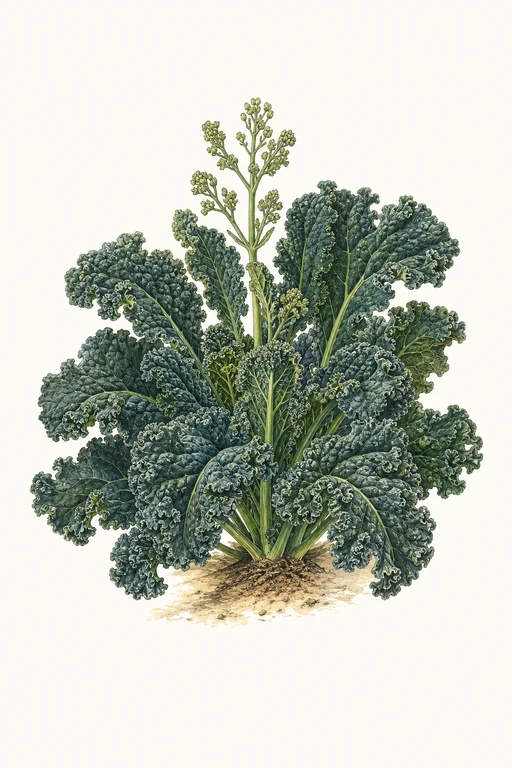
Sink your senses into Dwarf Blue Curled’s richly textured leaves—an inky, blue-green savoy with tight, curled ruffles that feel crisp and substantial at harvest. The compact plants form a dense rosette of tender foliage with a pleasantly mild, spinach-forward flavor, ideal for quick, vibrant dishes and elegant garnishes. Grow it for repeat harvests and enjoy its beauty as much as its versatility in fresh salads, sautés, and creamy sauces, plus pickled accents for a bright, tangy bite.
Sowing Tips

Soil Temperature
Direct sow or transplant when soil at planting depth holds 40°F for reliable germination and early growth.
Expert Note

For best flavor and slow bolting, keep soil evenly moist and choose cool-season sowings around your local frost dates.
Crop Dates
| Milestone | Date |
|---|---|
| Start Indoors | — |
| Climate | Frost-Free Climate |
| Transplant / Sow Outdoors | Oct 1st |
| Harvest Begins | Nov 8th |
| Harvest Ends | Feb 28th |
Crop Details
| Trait | Value |
|---|---|
| Days to Maturity | 38 |
| Sun Requirements | Full Sun |
| Growth Habit | Rosette |
| Support Needed | None |
| Planting Depth | Normal |
| Germination Temp (°F) | 70 |
| Min Soil Temp (°F) | 40 |
| Min Night Temp (°F) | 32 |
| Harden Off (days) | 6 |
Recommended Companions


Frequently Asked Questions
What pest or disease commonly affects Spinacia oleracea (dwarf blue curled spinach) and what should I do?
How often should I water Spinacia oleracea during the main growing phase?
How can I tell when Spinacia oleracea is ready to harvest?
Sowing Tips
Soil Temperature
Direct sow or transplant when soil at planting depth holds 40°F for reliable germination and early growth.
Expert Note
For best flavor and slow bolting, keep soil evenly moist and choose cool-season sowings around your local frost dates.
Sink your senses into Dwarf Blue Curled’s richly textured leaves—an inky, blue-green savoy with tight, curled ruffles that feel crisp and substantial at harvest. The compact plants form a dense rosette of tender foliage with a pleasantly mild, spinach-forward flavor, ideal for quick, vibrant dishes and elegant garnishes. Grow it for repeat harvests and enjoy its beauty as much as its versatility in fresh salads, sautés, and creamy sauces, plus pickled accents for a bright, tangy bite.