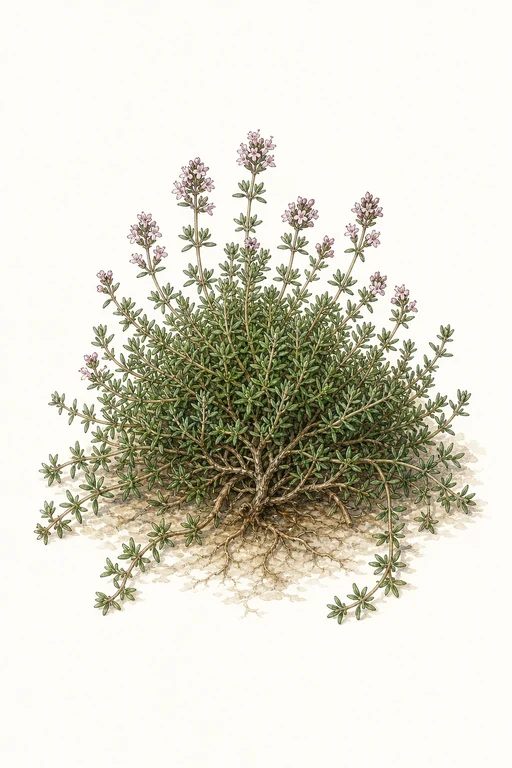
English Thyme
730d to harvest
Fragrant to the first touch, English Thyme fills the garden with a warm, herbal perfume—sweetly resinous and gently peppery. Its tiny, narrow leaves form a dense, evergreen mat with a crisp, aromatic texture that holds its character in dried bundles and in everyday flavoring blends. Grow English Thyme for reliable, long-season performance and a steady supply of intensely scented foliage for seasoning, sachets, and aromatic infusions.
Crop Dates
Growing note: In frost-free Zone 12b, grow this cool-season crop during the cooler dry season (October–February).
| Milestone | Date |
|---|---|
| Start Indoors | — |
| Climate | Frost-Free Climate |
| Transplant / Sow Outdoors | Oct 1st |
| Harvest Begins | Feb 28th |
| Harvest Ends | Feb 28th |
Crop Details
| Trait | Value |
|---|---|
| Days to Maturity | 730 |
| Sun Requirements | Full Sun |
| Growth Habit | Upright |
| Support Needed | None |
| Planting Depth | Normal |
| Germination Temp (°F) | 70 |
| Min Soil Temp (°F) | 50 |
| Min Night Temp (°F) | 45 |
| Harden Off (days) | 7 |
Recommended Companions
Frequently Asked Questions
How much should I water English thyme during the main growing phase?
During active growth, water English thyme deeply only when the top 1–2 inches of soil are dry, then let excess drain completely. In-ground thyme usually needs far less water than many herbs—aim for about every 7–14 days depending on heat, with longer gaps in cool or rainy weather. Avoid frequent light watering, which keeps the root zone wet and increases rot risk.
How can I tell when English thyme (Thymus vulgaris) is ready to harvest?
Harvest once plants have formed plenty of leafy growth—typically in the first year by late spring to early summer, with fuller, best-quality harvests starting the second year. Pick sprigs before flowering for the strongest leaf flavor; as soon as flower buds form, pinch growth for continued tender tips. Cut stems just above a leaf node and avoid taking more than about one-third of the plant at a time.