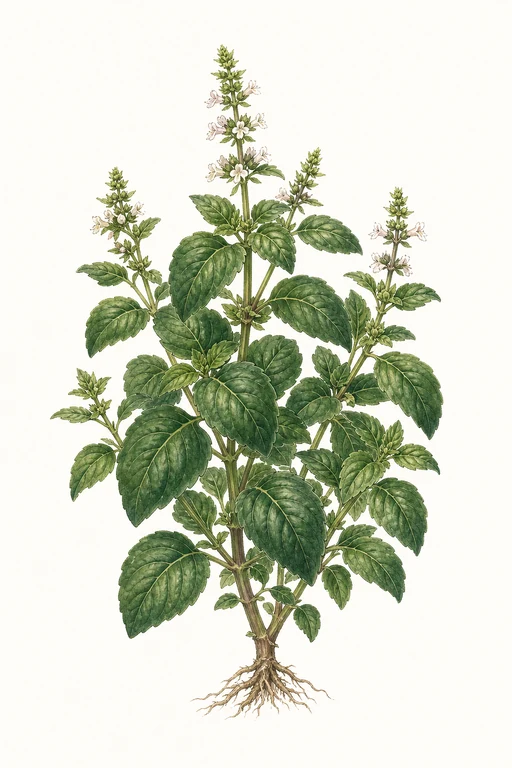
Greek Basil
50d to harvest
Fragrant and lush from the first pinch, Greek Basil unfurls into a dense mat of aromatic leaves with a cool, bright clove-and-citrus lift. The foliage is tender yet substantial, forming velvety, medium-to-large leaves that hold their character beautifully from early harvest through peak growth. Grow Greek Basil for bold herbal flavor in fresh garnishes, fragrant sauces, and vibrant pesto-style blends—its signature scent makes every pot and plate feel instantly alive.
Crop Dates
Growing note: Frost-free Zone 12b supports continuous outdoor production.
| Milestone | Date |
|---|---|
| Climate | Frost-Free Climate |
| Growing Approach | Continuous Production |
Crop Details
| Trait | Value |
|---|---|
| Days to Maturity | 50 |
| Sun Requirements | Full Sun |
| Growth Habit | Upright |
| Support Needed | None |
| Planting Depth | Normal |
| Germination Temp (°F) | 70 |
| Min Soil Temp (°F) | 60 |
| Min Night Temp (°F) | 50 |
| Harden Off (days) | 10 |
Recommended Companions
Frequently Asked Questions
What pest or disease most commonly affects Ocimum basilicum (Greek basil), and what should I do?
A frequent problem is downy mildew (often seen as yellow patches on upper leaves with gray-purple growth underneath) which spreads quickly in humid weather. Remove and destroy infected leaves, improve airflow by spacing plants, and water at the soil line in the morning to keep foliage dry. If it keeps spreading, treat with a labeled organic fungicide that targets downy mildew and follow the label intervals.
How often should I water Greek basil during peak growth, and what soil moisture level is best?
During the main growth phase, keep the soil evenly moist but not soggy—aim for the top 1 inch to dry slightly between waterings. In warm, full-sun conditions this is often about 1–2 deep waterings per week, but check by finger depth rather than the calendar. Use pots/raised beds with good drainage so excess water can run off quickly.