SproutSmart
SproutSmart Intelligent Garden Sowing

Guernsey

Parsnip
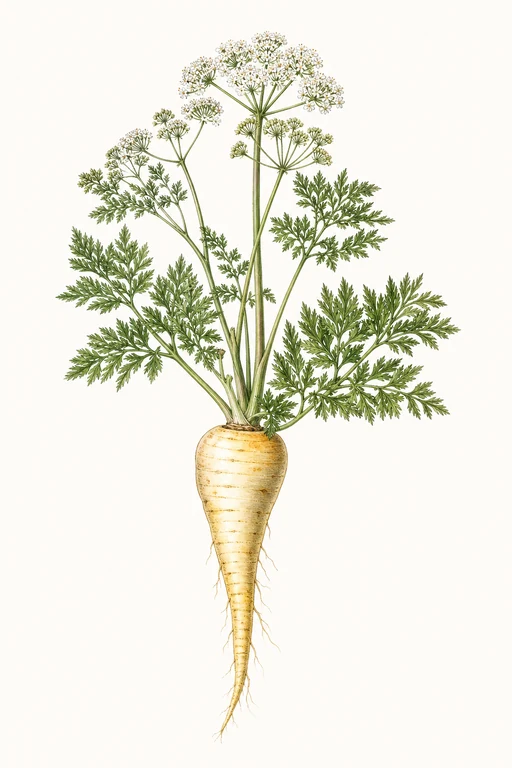
Botanical illustration of Guernsey
🌱 105d to harvest Taproot

Sweet, honeyed roots with a creamy, pearly core—Guernsey parsnips develop a tender, fine-grained texture that feels almost silk-s…

Planting Schedule

Add Guernsey to your garden to build a schedule and get reminders.

Crop Dates

Growing note: In frost-free Zone 12b, grow this cool-season crop during the cooler dry season (October–February).
MilestoneDate
Start Indoors
ClimateFrost-Free Climate
Transplant / Sow OutdoorsOct 1st
Harvest BeginsJan 14th
Harvest EndsFeb 28th

Crop Details

TraitValue
Days to Maturity105
Sun RequirementsFull SunFull sun
Growth HabitTaproot
Support NeededNone
Planting DepthNormal
Germination Temp (°F)50
Min Soil Temp (°F)45
Min Night Temp (°F)28
Harden Off (days)Not Required

Frequently Asked Questions


What pest or disease commonly affects Pastinaca sativa (parsnip/“Guernsey”) and what should I do?
Parsnips commonly suffer from leaf blight/alternaria and sometimes powdery mildew, especially in cool, wet weather. Remove and discard infected leaves, space plants for airflow, and avoid overhead watering; if the problem keeps recurring, use a labeled organic fungicide and start applications when spots first appear. Watch for carrot/parsley-family issues like aphids on tender growth—blast them off with water and encourage beneficial insects rather than applying broad insecticides.
How often should I water Pastinaca sativa during the main growing phase?
During active root growth, keep soil evenly moist so the taproot forms straight and doesn’t split; in most gardens this means watering about 1–2 times per week with enough water to wet the root zone, then adjusting for rainfall. If the surface dries out, parsnip roots can become woody—check moisture 2–3 inches down and water when it’s starting to dry there. Once roots are well established, reduce frequency slightly but don’t let the soil fully dry out for long periods.
How do I tell when Guernsey (Pastinaca sativa) is ready to harvest?
Harvest at about 105 days for typical maturity, but use root size and feel as the main guide: the roots should be well-formed, firm, and typically several inches long with a good diameter. Many gardeners also wait for a light frost because it sweetens parsnip flavor—if you can, lift roots after the first cold spell while the soil is workable. Don’t delay too long in wet ground, since prolonged soggy conditions can reduce texture.
Botanical illustration of Guernsey

Sweet, honeyed roots with a creamy, pearly core—Guernsey parsnips develop a tender, fine-grained texture that feels almost silk-smooth when roasted. Their flavor deepens into a warm, nutty sweetness, making them a standout for hearty winter favorites, from oven-roasting to velvety mash and rich, spoonable sauces. For home gardeners, Guernsey is a reliable, long-season choice that rewards patience with beautifully shaped, market-ready roots at about 105 days.