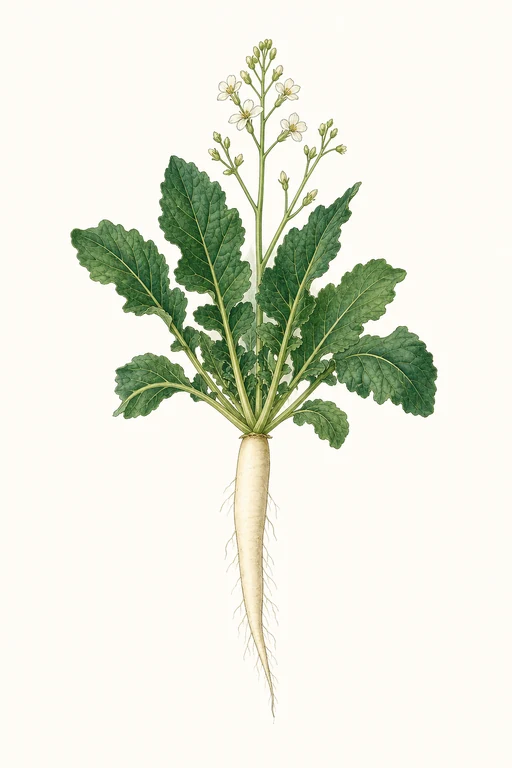
Long White
Radish
🌱 55d to harvest
Taproot
Crisp and luminous, Long White winter radish delivers a clean, cool snap with a gently peppery edge that mellows beautifully as t…
Crop Dates
| Milestone | Date |
|---|---|
| Start Indoors | Direct Sow |
| Last Frost | Jan 1st |
| Transplant / Sow Outdoors | Jan 1st |
| Harvest Begins | Feb 25th |
| Harvest Ends | Dec 31st |
Crop Details
| Trait | Value |
|---|---|
| Days to Maturity | 55 |
| Sun Requirements | Full Sun |
| Growth Habit | Taproot |
| Support Needed | None |
| Planting Depth | Normal |
| Germination Temp (°F) | 50 |
| Min Soil Temp (°F) | 40 |
| Min Night Temp (°F) | 28 |
| Harden Off (days) | Not Required |
Recommended Companions
Frequently Asked Questions
What pest or disease problem commonly affects Raphanus sativus (radish) and how do I control it?
A frequent issue is flea beetle damage, which causes small shot-hole holes in radish leaves and can stunt growth. Use floating row cover from sowing until the plants are established, then remove to allow pollinator access if needed; for heavy pressure, apply an approved insecticidal soap and reapply per label after rain. If you see leaf yellowing and downy/moldy growth, remove badly affected leaves and avoid wetting foliage to reduce spread.
How often should I water Raphanus sativus during the main growing phase?
During bulbing (roughly weeks 3–6), keep the soil consistently evenly moist—about 1 inch of water per week total, adjusted for rainfall and container size. Water lightly but more frequently during hot spells so the soil doesn’t dry out; irregular moisture is a common cause of pithy or woody radishes. Check by feel: the top 1 inch should stay damp, not soggy.
How can I tell when long radish (Raphanus sativus) is ready to harvest?
Harvest when the roots reach the expected size and feel firm—usually around 55 days from sowing, but check early by gently pulling one plant. The skin should look smooth and the top of the root should be well-formed; if it’s still narrow or soft, give it a few more days. Don’t wait too long, because prolonged time in the ground can lead to tough texture and a stronger, more pungent bite.