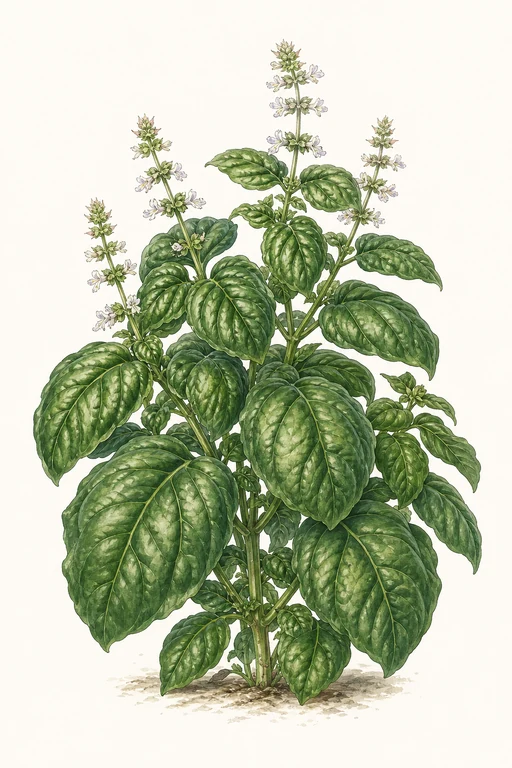
Mammoth Basil
Basil
🌱 60d to harvest
Upright
Mammoth Basil opens with an intoxicating, cool-mint brightness and a rich, classic basil perfume that lingers on the fingertips—t…
Crop Dates
| Milestone | Date |
|---|---|
| Start Indoors | Dec 4th |
| Last Frost | Jan 1st |
| Transplant / Sow Outdoors | Feb 19th |
| Harvest Begins | Apr 20th |
| Harvest Ends | Dec 31st |
Crop Details
| Trait | Value |
|---|---|
| Days to Maturity | 60 |
| Sun Requirements | Full Sun |
| Growth Habit | Upright |
| Support Needed | None |
| Planting Depth | Surface |
| Germination Temp (°F) | 70 |
| Min Soil Temp (°F) | 60 |
| Min Night Temp (°F) | 50 |
| Harden Off (days) | 10 |
Recommended Companions
Frequently Asked Questions
What pest or disease most commonly affects Ocimum basilicum (basil), and how do I fix it?
Basil commonly suffers from downy mildew (often showing yellow patches on the upper leaves with fuzzy gray-purple growth on the underside), especially in cool, humid weather. Remove and discard infected leaves, increase airflow around plants, and water at the soil line to keep foliage dry. If the problem keeps spreading, start fresh from healthy plants because basil mildew can quickly take over dense leaf growth.
How often should I water Ocimum basilicum during the main growing phase?
During active growth (roughly weeks 3–8), water whenever the top 1 inch of soil feels dry, then soak thoroughly until water drains. Aim for consistently moist soil—not soggy—because Ocimum basilicum develops root stress and disease faster in waterlogged beds. In full sun, this often means watering about 1–2 times per week depending on your heat and soil type.
How can I tell when Mammoth basil (Ocimum basilicum) is ready to harvest?
Harvest when plants are about 8–10 inches tall and have developed several pairs of mature leaves, typically around 60 days from sowing under good conditions. For best regrowth, pinch or cut just above a leaf pair (don’t harvest more than about one-third of the plant at once). If flower buds appear, begin harvesting more frequently to slow bolting and keep leaves tender.