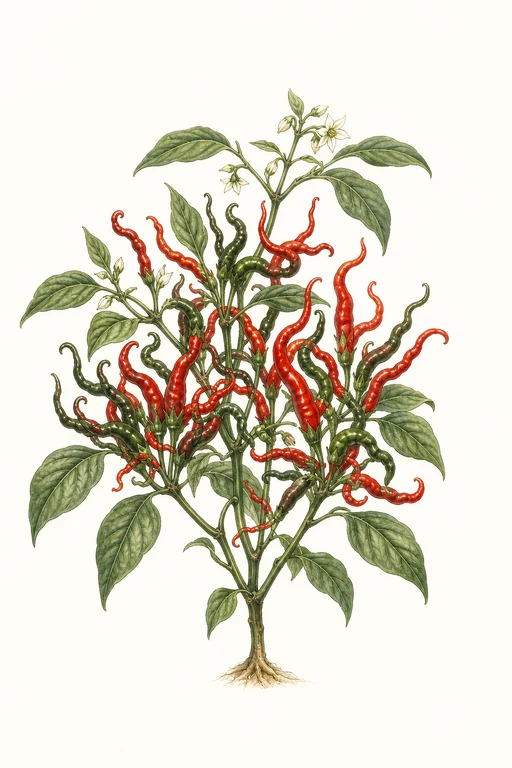
Medusa
Pepper
🌱 85d to harvest
Bush
A living jewel of the garden, Medusa Pepper dazzles with a cascade of twisting, many-tipped fruits that catch the light like poli…
Crop Dates
| Milestone | Date |
|---|---|
| Start Indoors | Nov 6th |
| Last Frost | Jan 1st |
| Transplant / Sow Outdoors | Feb 26th |
| Harvest Begins | May 22nd |
| Harvest Ends | Dec 31st |
Crop Details
| Trait | Value |
|---|---|
| Days to Maturity | 85 |
| Sun Requirements | Full Sun |
| Growth Habit | Bush |
| Support Needed | Stake |
| Planting Depth | Normal |
| Germination Temp (°F) | 80 |
| Min Soil Temp (°F) | 60 |
| Min Night Temp (°F) | 50 |
| Harden Off (days) | 10 |
Recommended Companions
Frequently Asked Questions
What’s a common pest or disease for Capsicum annuum (Medusa peppers) and how can I control it?
Watch for pepper foliage diseases like powdery mildew and for sucking pests such as aphids, which often cluster on new growth. Start by improving airflow (space plants, avoid wetting leaves) and remove heavily affected leaves early. If aphids appear, spray with a strong stream of water or use insecticidal soap, and repeat every 5–7 days until no new colonies form.
How often should I water Medusa peppers (Capsicum annuum) during peak growth?
During active flowering and fruiting, keep the soil consistently moist but not soggy—aim for watering about 1–2 times per week depending on heat and container size. Water deeply when the top 1 inch of soil dries, since irregular moisture can trigger blossom drop and uneven fruit set. Mulch around the plants helps maintain steadier moisture through the 85-day season.
How do I know when Medusa peppers (Capsicum annuum) are ready to harvest?
Harvest when fruits have reached their intended size (typically around day ~85) and the skin is fully colored for the cultivar stage you want—many pepper growers wait for deep, mature color rather than early green. The pepper should feel firm and glossy, and the fruit should detach cleanly with a gentle twist or snip. For best eating quality, harvest regularly once they start coloring, because leaving ripe fruit can slow new development.