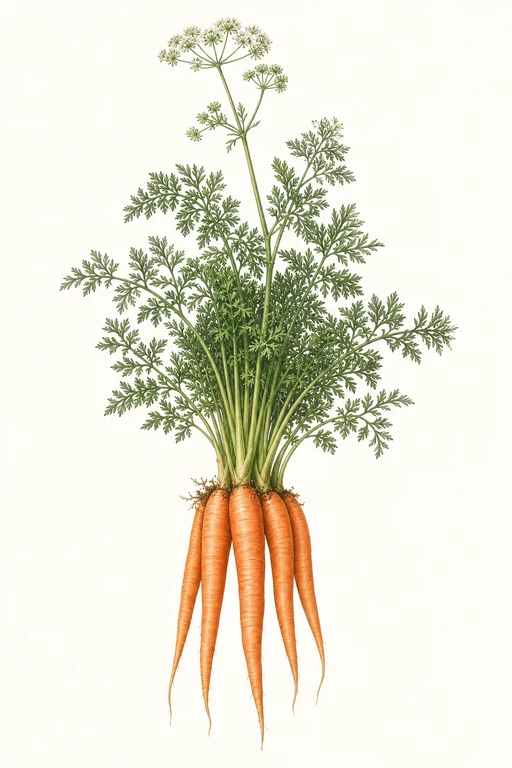
Napoli
Carrot
🌱 75d to harvest
Rosette
Sweet and vivid from the first bite—Napoli Nantes carrots bring a tender, crisp snap with a distinctly mellow, honeyed flavor. At…
Crop Dates
| Milestone | Date |
|---|---|
| Start Indoors | Direct Sow |
| Last Frost | Jan 1st |
| Transplant / Sow Outdoors | Jan 1st |
| Harvest Begins | Mar 17th |
| Harvest Ends | Dec 31st |
Crop Details
| Trait | Value |
|---|---|
| Days to Maturity | 75 |
| Sun Requirements | Full Sun |
| Growth Habit | Rosette |
| Support Needed | None |
| Planting Depth | Normal |
| Germination Temp (°F) | 65 |
| Min Soil Temp (°F) | 40 |
| Min Night Temp (°F) | 28 |
| Harden Off (days) | Not Required |
Recommended Companions
Frequently Asked Questions
What pest or disease commonly affects Daucus carota (carrots) like Napoli, and how do I manage it?
Watch for carrot fly larvae, which cause tunneling and a “pithy” core; check plants for wilting tops and pale, burrowing damage near the soil line. Use fine mesh row covers over the crop early to prevent egg-laying, and remove badly damaged roots promptly to reduce breeding. Keep weeds down and avoid fresh manure, which can attract pests and worsen root health in Apiaceae beds.
How often should I water Napoli carrots during their main growth phase, and what soil moisture level is best?
During the 3–7 week root swelling period, keep the top 1–2 inches of soil consistently moist, watering about 1 inch per week total in typical conditions. If the soil dries out, roots can fork; if it stays waterlogged, growth slows and roots can rot. Water deeply but less frequently, then ensure the bed drains well so the soil doesn’t stay soggy between waterings.
How can I tell when Napoli carrots are ready to harvest?
Start checking around 70–75 days: mature carrots should show strong color and a clear shoulder above the soil surface with the diameter you want. Harvest by loosening the soil with a fork and pulling straight up; if tops look overly lush and roots are still thin, give them another 1–2 weeks. For best sweetness, harvest after a light cool period in late season, as carrots (Daucus carota) often develop better flavor then.