
Rattail Radish
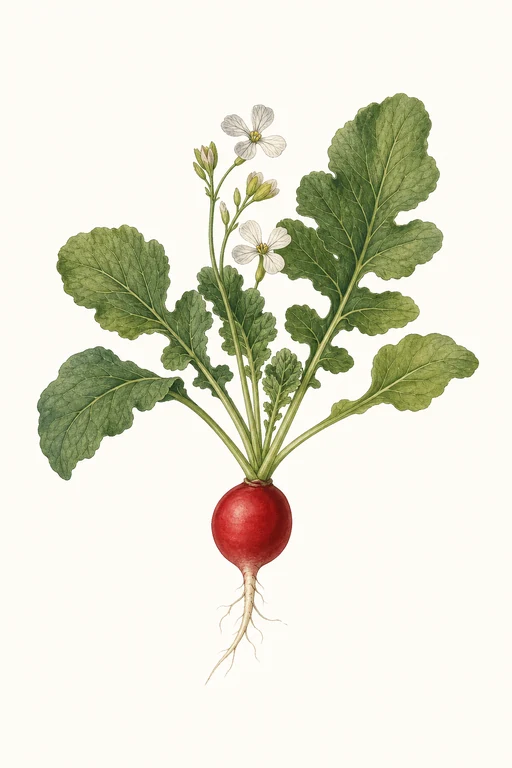
Fragrant, peppery pods unfurl on Rattail Radish, turning the garden into a living bouquet of crisp green and soft lavender blooms. At maturity, the slender, dangling seed pods hold a tender snap and a bright, radish-sharp flavor that’s especially prized for quick pickling and lively fresh use. Grow it for its distinctive rat-tail silhouette—an edible spectacle that keeps producing as long as you harvest the pods young.
Crop Dates
| Milestone | Date |
|---|---|
| Start Indoors | — |
| Climate | Frost-Free Climate |
| Transplant / Sow Outdoors | Oct 1st |
| Harvest Begins | Nov 15th |
| Harvest Ends | Feb 28th |
Crop Details
| Trait | Value |
|---|---|
| Days to Maturity | 45 |
| Sun Requirements | Full Sun |
| Growth Habit | Taproot |
| Support Needed | None |
| Planting Depth | Normal |
| Germination Temp (°F) | 55 |
| Min Soil Temp (°F) | 40 |
| Min Night Temp (°F) | 28 |
| Harden Off (days) | Not Required |
Recommended Companions


Frequently Asked Questions
How often should I water rattail radish during its main growing phase?
How do I know when Raphanus sativus (rattail radish) is ready to harvest?
Fragrant, peppery pods unfurl on Rattail Radish, turning the garden into a living bouquet of crisp green and soft lavender blooms. At maturity, the slender, dangling seed pods hold a tender snap and a bright, radish-sharp flavor that’s especially prized for quick pickling and lively fresh use. Grow it for its distinctive rat-tail silhouette—an edible spectacle that keeps producing as long as you harvest the pods young.
Sowing Tips

Soil Temperature
Direct sow or transplant when soil at planting depth holds 40°F for reliable germination and early growth.
Expert Note

Sow seed pods in warm, consistently moist soil and harvest the pods young (before they toughen) for the best flavor.