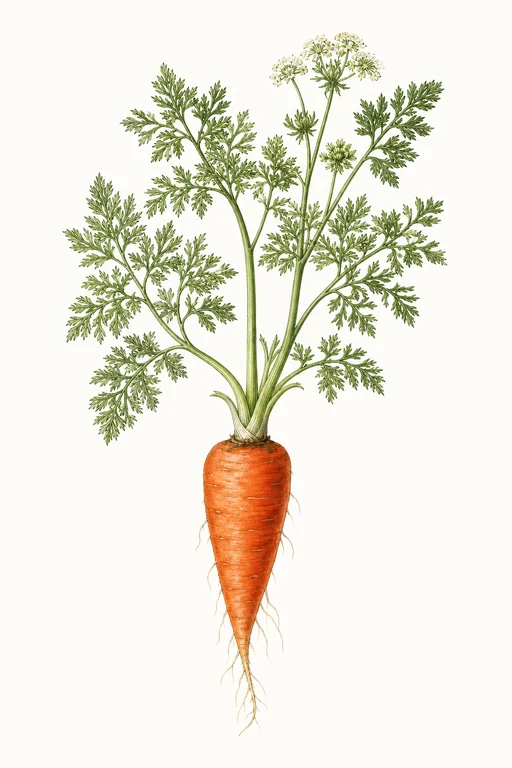
Red Cored Chantenay
Carrot
🌱 75d to harvest
Rosette
Sweetly earthy and richly aromatic, Red Cored Chantenay brings a vivid, ember-red core that glows against a warm orange exterior.…
Crop Dates
| Milestone | Date |
|---|---|
| Start Indoors | Direct Sow |
| Last Frost | Jan 1st |
| Transplant / Sow Outdoors | Jan 1st |
| Harvest Begins | Mar 17th |
| Harvest Ends | Dec 31st |
Crop Details
| Trait | Value |
|---|---|
| Days to Maturity | 75 |
| Sun Requirements | Full Sun |
| Growth Habit | Rosette |
| Support Needed | None |
| Planting Depth | Normal |
| Germination Temp (°F) | 70 |
| Min Soil Temp (°F) | 45 |
| Min Night Temp (°F) | 28 |
| Harden Off (days) | Not Required |
Recommended Companions
Frequently Asked Questions
What pest or disease commonly affects Daucus carota (carrot) like Red Cored Chantenay, and how do I treat it?
Carrot fly (larvae that tunnel into roots) is a frequent problem, especially in warm, coastal or long-summer areas. Cover sown beds with fine insect netting as soon as seeds germinate, and keep the area free of weeds to reduce egg-laying sites; remove and discard any severely damaged roots. If you see early foliage damage that persists, rotate crops yearly and avoid planting carrots in the same bed for 3+ years to break the pest cycle.
How often should I water Red Cored Chantenay during the main growing phase to get straight, fleshy roots?
During active root bulking (once seedlings are established and until about a few weeks before harvest), keep the top 1–2 inches of soil consistently moist but not soggy. In warm weather, this usually means watering deeply 1–2 times per week (more often during dry spells) so moisture reaches the full rooting depth without causing waterlogged conditions. Irregular watering can lead to cracking or forked roots, so aim for steady moisture and stop heavy watering in the final week to reduce root splitting.
How can I tell when Red Cored Chantenay carrots are ready to harvest?
Start checking around 70–75 days after sowing: gently pull back soil near the crown and look for the root shoulder to reach the expected orange diameter and color. The tops should look healthy, and you’ll see a clear red core just under the soil when you inspect a sample. Harvest promptly when they’re the right size—leaving mature carrots in the ground too long can reduce sweetness and firmness.