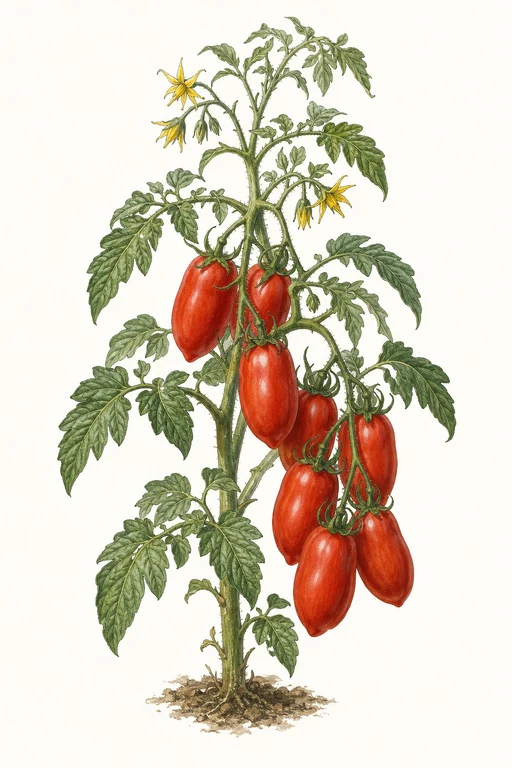
Roma VF
75d to harvest
Sun-warmed, deep-red flesh with a dense, spoonable body—Roma VF delivers that classic paste-tomato richness in every harvest. Expect firm, meaty texture and a balanced, gently sweet flavor that shines when you want tomatoes to stay thick and flavorful. Grow Roma VF for dependable yields and a steady stream of elongated fruits that are ideal for thick sauces, roasting, and hearty preserves.
Crop Dates
Growing note: Frost-free Zone 12b supports continuous outdoor production.
| Milestone | Date |
|---|---|
| Climate | Frost-Free Climate |
| Growing Approach | Continuous Production |
Crop Details
| Trait | Value |
|---|---|
| Days to Maturity | 75 |
| Sun Requirements | Full Sun |
| Growth Habit | Determinate |
| Support Needed | Cage |
| Planting Depth | Deep |
| Germination Temp (°F) | 70 |
| Min Soil Temp (°F) | 60 |
| Min Night Temp (°F) | 50 |
| Harden Off (days) | 8 |
Recommended Companions
Frequently Asked Questions
What pest or disease most commonly affects Solanum lycopersicum (Roma VF) and how do I control it?
Watch closely for early blight (Alternaria) and leaf spot, which commonly show up as dark, concentric rings on older leaves. Remove and destroy affected leaves early, water at the soil line (not on foliage), and improve airflow by spacing plants and pruning lower leaves that touch the ground. If new spots keep appearing, start a labeled fungicide regimen for tomatoes at the first signs and repeat according to the label intervals.
How often should I water Roma VF during the main growing phase to keep plants productive?
During active fruit set and growth, keep soil evenly moist by watering deeply when the top 1–2 inches begin to dry, usually about 2–3 times per week depending on heat and soil type. Aim for consistent moisture to avoid flower drop and cracking; uneven wet/dry cycles are a common cause of poor Roma fruit quality. Mulch around the plants to stabilize moisture and reduce the frequency of deep watering.