
Sicilian Violet
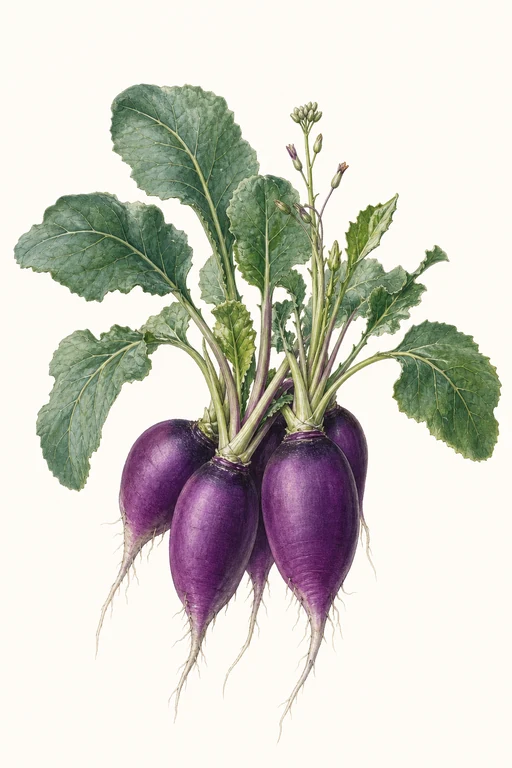
Sweetly peppered and vividly aromatic, Sicilian Violet radish brings a jewel-toned crunch to the garden—its skin a luminous violet that deepens toward the shoulder, with a crisp, tender interior that stays pleasantly juicy. At just about 25 days from sowing, you’ll harvest salad radishes with a clean, refreshing bite that shines in fresh plates, brightening spring mixes and quick pickles alike. Grow them for their striking color and fast turnaround—each handful feels like a small bouquet of edible color.
Crop Dates
| Milestone | Date |
|---|---|
| Start Indoors | — |
| Climate | Frost-Free Climate |
| Transplant / Sow Outdoors | Oct 1st |
| Harvest Begins | Oct 26th |
| Harvest Ends | Feb 28th |
Crop Details
| Trait | Value |
|---|---|
| Days to Maturity | 25 |
| Sun Requirements | Full Sun |
| Growth Habit | Taproot |
| Support Needed | None |
| Planting Depth | Normal |
| Germination Temp (°F) | 55 |
| Min Soil Temp (°F) | 45 |
| Min Night Temp (°F) | 35 |
| Harden Off (days) | Not Required |
Recommended Companions


Frequently Asked Questions
What pest or disease commonly affects Raphanus sativus (Sicilian Violet), and how can I control it?
How do I tell when Sicilian Violet radishes are ready to harvest?
Sweetly peppered and vividly aromatic, Sicilian Violet radish brings a jewel-toned crunch to the garden—its skin a luminous violet that deepens toward the shoulder, with a crisp, tender interior that stays pleasantly juicy. At just about 25 days from sowing, you’ll harvest salad radishes with a clean, refreshing bite that shines in fresh plates, brightening spring mixes and quick pickles alike. Grow them for their striking color and fast turnaround—each handful feels like a small bouquet of edible color.
Sowing Tips

Soil Temperature
Direct sow or transplant when soil at planting depth holds 45°F for reliable germination and early growth.
Expert Note

For the mildest flavor, keep soil evenly moist and harvest as soon as roots reach tennis-ball size to avoid pithiness.