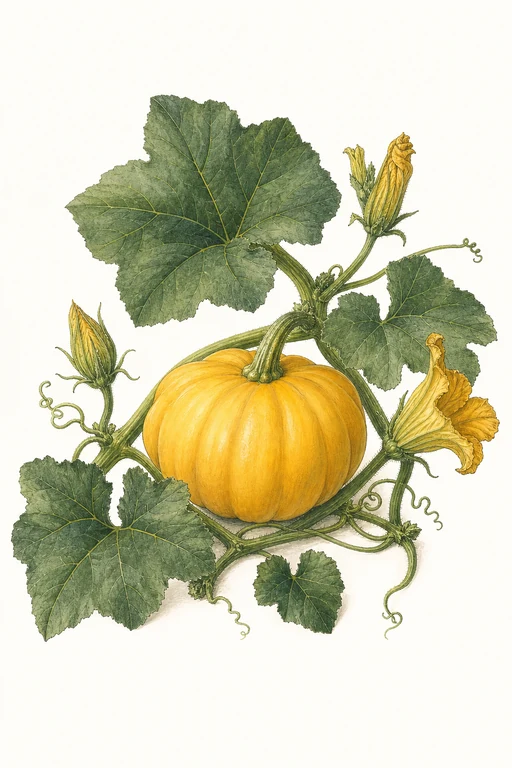
Sunshine F1
Squash
🌱 105d to harvest
Vine
Sunshine F1 brings a golden, sunlit glow to the garden—its buttercup squash develops a rich, warm color and a tender, fine-graine…
Crop Dates
| Milestone | Date |
|---|---|
| Start Indoors | Dec 18th |
| Last Frost | Jan 1st |
| Transplant / Sow Outdoors | Jan 1st |
| Harvest Begins | Apr 16th |
| Harvest Ends | Dec 31st |
Crop Details
| Trait | Value |
|---|---|
| Days to Maturity | 105 |
| Sun Requirements | Full Sun |
| Growth Habit | Vine |
| Support Needed | Trellis |
| Planting Depth | Normal |
| Germination Temp (°F) | 70 |
| Min Soil Temp (°F) | 65 |
| Min Night Temp (°F) | 55 |
| Harden Off (days) | 12 |
Recommended Companions
Frequently Asked Questions
What’s the most common disease to watch for on Cucurbita maxima (Sunshine F1), and how do I prevent it?
For Cucurbita maxima, powdery mildew is one of the most frequent problems, showing up as a white, dusty coating on leaves and leading to earlier leaf drop. Keep plants in full sun with good airflow, water at the base (not on leaves), and remove the most heavily affected leaves early. If it starts spreading, treat with a labeled sulfur fungicide early in the first signs of mildew and reapply according to the label for home gardens.
How often should I water Sunshine F1 (Cucurbita maxima) during the main growing phase?
During active vine and fruit growth, water deeply about 1–2 times per week, aiming for consistently moist soil 4–6 in (10–15 cm) down. Let the top 1 inch (2–3 cm) of soil dry slightly between waterings to reduce the risk of foliar diseases, then soak thoroughly again—especially once fruits are setting. Avoid frequent light watering, which can keep roots shallow and encourage mildew-prone, stressed plants.
How do I tell when Sunshine F1 (Cucurbita maxima) is ready to harvest?
Harvest when the rind is fully hardened and can’t be easily punctured with your thumbnail, and the skin looks uniformly mature (often with deep, solid color). The fruit should also sound more hollow when tapped and the vine/tendril closest to the fruit starts to dry. Cut with sharp pruners leaving 1–2 in (2.5–5 cm) of stem attached, which helps it cure and store better after a warm, dry curing period.