SproutSmart
SproutSmart Intelligent Garden Sowing

White Flat Boer

Squash
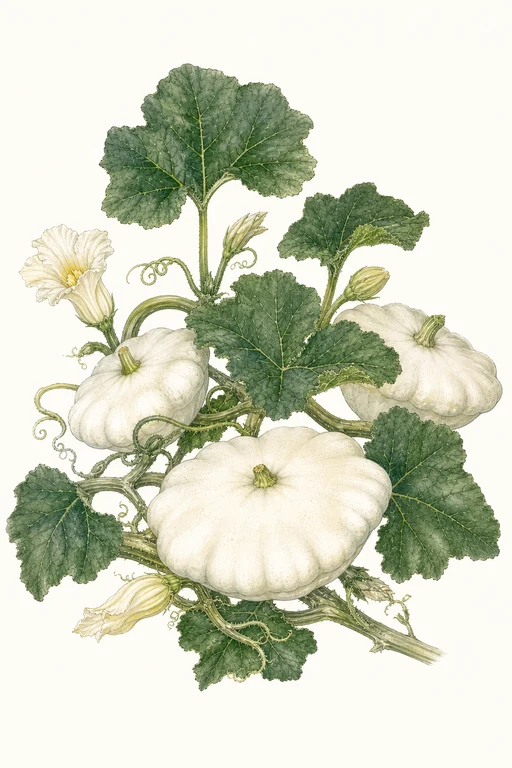
Botanical illustration of White Flat Boer
🌱 95d to harvest Vine

Silky, snow-white pattypans with a gently fluted crown arrive at maturity like small porcelain saucers—tender, mild, and delicate…

Planting Schedule

Add White Flat Boer to your garden to build a schedule and get reminders.

Crop Dates

Growing note: Frost-free Zone 12b supports continuous outdoor production.
MilestoneDate
ClimateFrost-Free Climate
Growing ApproachContinuous Production

Crop Details

TraitValue
Days to Maturity95
Sun RequirementsFull SunFull sun
Growth HabitVine
Support NeededTrellis
Planting DepthNormal
Germination Temp (°F)70
Min Soil Temp (°F)65
Min Night Temp (°F)55
Harden Off (days)10

Frequently Asked Questions


What pest or disease problem is most common on Cucurbita pepo (white flat boer), and how do I treat it?
Powdery mildew often shows up on Cucurbita pepo as a white, powdery coating on leaves during warm, humid spells. Remove the most heavily infected leaves early, then improve airflow by training plants to sprawl less and spacing them adequately; avoid wetting foliage when watering. If it keeps spreading, use a labeled sulfur-based fungicide or potassium bicarbonate at the first signs and repeat according to the product label.
How often should I water Cucurbita pepo during the main growing phase, and what soil moisture target should I maintain?
During active vine and fruit growth, keep soil evenly moist but not soggy—aim for about 1–1.5 inches (2.5–4 cm) of water per week, adjusting for heat and rainfall. Water deeply at the base when the top 1–2 inches (2.5–5 cm) of soil dry out, because Cucurbita pepo roots struggle in waterlogged conditions. Reduce watering slightly once fruits are sizing up to avoid split or watery fruit.
How can I tell when Cucurbita pepo (white flat boer) is ready to harvest?
Harvest at about 95 days when the rind has turned fully hard and the surface color looks mature (for white types, a creamy white rather than pale/greenish). The stem should start to dry and the fruit should feel heavy for its size; press the rind with a fingernail—if it resists denting, it’s ready. Cut the fruit with a bit of stem attached and cure it warm and dry for better keeping quality.
Botanical illustration of White Flat Boer

Silky, snow-white pattypans with a gently fluted crown arrive at maturity like small porcelain saucers—tender, mild, and delicately sweet. Their firm, fine-grained flesh holds its shape beautifully, offering a satisfying bite whether you savor them fresh or roast until lightly golden. White Flat Boer is a standout for gardeners who want abundant, attractive fruit that shines in summer displays and performs reliably from bed to basket for sauces and quick pickling.