SproutSmart
SproutSmart Intelligent Garden Sowing

Alabaster

Celeriac
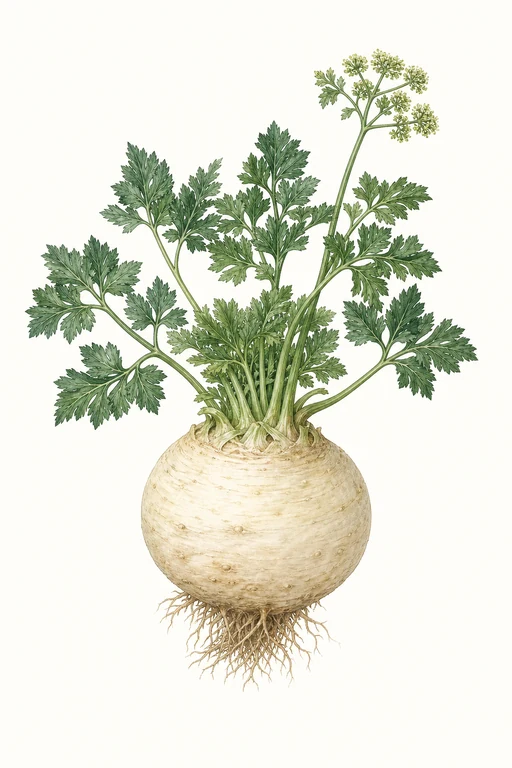
Botanical illustration of Alabaster
🌱 120d to harvest Upright

Silky and luminous, Alabaster celeriac forms a smooth, ivory “bulb” with a clean, bright celery aroma and a sweet, mellow bite. T…

Planting Schedule

Add Alabaster to your garden to build a schedule and get reminders.

Crop Dates

MilestoneDate
Start IndoorsOct 23rd
Last FrostJan 1st
Transplant / Sow OutdoorsDec 25th
Harvest BeginsApr 24th
Harvest Ends

Crop Details

TraitValue
Days to Maturity120
Sun RequirementsFull SunFull sun
Growth HabitUpright
Support NeededNone
Planting DepthNormal
Germination Temp (°F)70
Min Soil Temp (°F)45
Min Night Temp (°F)35
Harden Off (days)6

Frequently Asked Questions


How do I prevent and treat downy mildew on Alabaster (120-day) plants?
Downy mildew shows up as yellowing patches on the top of leaves with gray-purple growth on the underside, often after humid weather. Remove and discard badly affected leaves, avoid wetting foliage, and thin plants so air moves through the canopy. If it’s spreading, start a labeled fungicide for downy mildew as soon as symptoms appear and repeat according to the label; don’t wait for full leaf collapse.
How often should I water Alabaster during the main growing phase?
During the 120-day growth period, keep the soil consistently moist but not soggy—aim for top 1–2 inches to dry slightly between waterings. In typical summer conditions, this usually means watering about 1–2 times per week, but increase frequency if beds dry out faster or you’re in hot, windy weather. Use a deep watering that reaches the root zone, since frequent light watering encourages shallow roots and stress.
When is Alabaster ready to harvest?
Harvest when plants reach the full 120-day maturity window and the heads/structure is fully formed and firm, with color characteristic of the variety. For best eating quality, pick when it’s mature but before it starts to soften or split; if you see leaves beginning to decline rapidly, harvest promptly. If unsure, check the base/center firmness—if it still feels loose or underdeveloped, wait a few more days and recheck.
Botanical illustration of Alabaster

Silky and luminous, Alabaster celeriac forms a smooth, ivory “bulb” with a clean, bright celery aroma and a sweet, mellow bite. The flesh stays tender and crisp with a fine, even texture, making it especially satisfying for roasting, fresh slicing, and creamy sauces where its delicate flavor shines. A steady 120-day journey rewards home gardeners with a refined, garden-to-plate centerpiece that stores well and stays flavorful.

Sowing Tips

Transplant Conditions

Wait until soil reaches 45°F and nights stay above 35°F before moving outdoors. Harden off for 6 days first.

Expert Note

Start indoors early and keep seedlings evenly moist; celeriac needs cool weather but won’t size up well if stressed by dryness or heat.