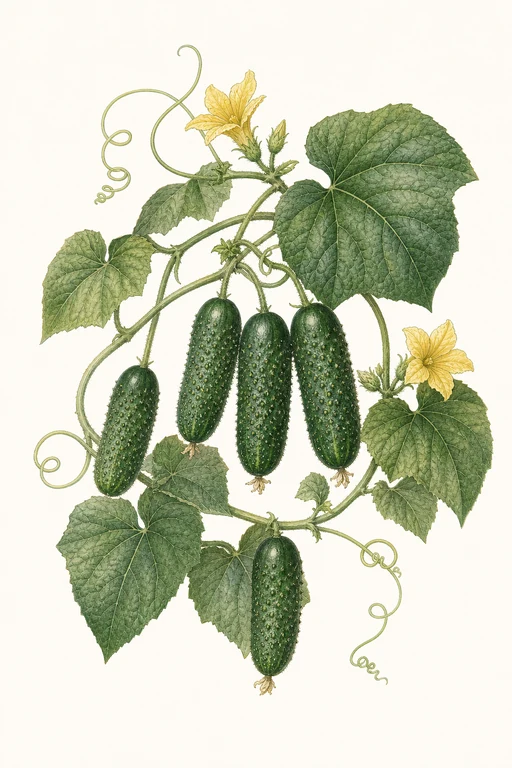
Calypso
Cucumber
🌱 48d to harvest
Vine
Crisp as chilled glass, Calypso pickling cucumbers deliver a clean, bright snap with a refreshingly mild, subtly sweet flavor. At…
Crop Dates
| Milestone | Date |
|---|---|
| Start Indoors | Direct Sow |
| Last Frost | Jan 1st |
| Transplant / Sow Outdoors | Jan 15th |
| Harvest Begins | Mar 4th |
| Harvest Ends | — |
Crop Details
| Trait | Value |
|---|---|
| Days to Maturity | 48 |
| Sun Requirements | Full Sun |
| Growth Habit | Vine |
| Support Needed | Trellis |
| Planting Depth | Normal |
| Germination Temp (°F) | 75 |
| Min Soil Temp (°F) | 65 |
| Min Night Temp (°F) | 55 |
| Harden Off (days) | 12 |
Recommended Companions
Frequently Asked Questions
How do I manage powdery mildew on Cucumis sativus (pickling cucumbers) in my garden?
Powdery mildew shows up as a white, dusty coating on cucumber leaves, usually starting midseason. Cut off heavily infected leaves early, improve airflow by spacing plants and avoiding wetting foliage, and spray with a labeled sulfur product (or a potassium bicarbonate/eco-fungicide option) when you first see spots and again as directed. If outbreaks keep worsening, remove the most infected plants to slow spread and use fresh soil or rotate the crop next season.
How often should I water Cucumis sativus during the main growing phase to prevent bitterness and misshapen fruit?
During active flowering and fruiting (after the first cucumbers form), keep the soil consistently moist but not waterlogged—about 1–2 inches per week depending on heat and rainfall. Water deeply at the base so moisture reaches the root zone, aiming for steady moisture rather than letting beds dry out between waterings, which can increase bitterness and lead to poorly formed cucumbers. Mulch around the plants to reduce rapid moisture swings, especially during hot, sunny days.
When are Calypso pickling cucumbers (Cucumis sativus) ready to harvest?
Pick Calypso cucumbers at about 48 days to maturity, when fruits are firm and crisp and still small for pickling. Harvest when they’re roughly 3–4 inches long (and the skin looks glossy and evenly green), typically every 1–2 days once production ramps up. Leaving them to grow longer reduces crispness and can slow further fruiting.