SproutSmart
SproutSmart Intelligent Garden Sowing

Carrot

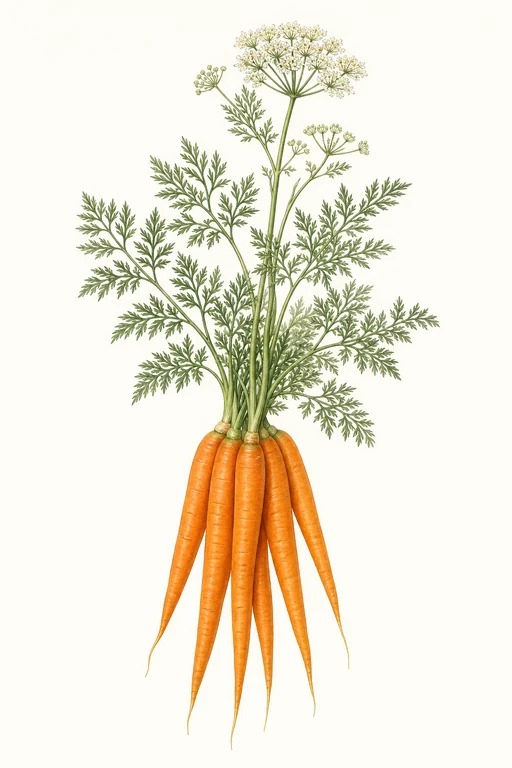
Botanical illustration of Carrot
🌱 75d to harvest Rosette

Sweet, garden-bright flavor leads the way with Carrot ‘Carrot’ (Nantes-type), where tender roots develop a smooth, fine-grained b…

Planting Schedule

Add Carrot to your garden to build a schedule and get reminders.

Crop Dates

MilestoneDate
Start IndoorsDirect Sow
Last FrostJan 1st
Transplant / Sow OutdoorsJan 1st
Harvest BeginsMar 17th
Harvest Ends

Crop Details

TraitValue
Days to Maturity75
Sun RequirementsFull SunFull sun
Growth HabitRosette
Support NeededNone
Planting DepthSurface
Germination Temp (°F)70
Min Soil Temp (°F)45
Min Night Temp (°F)28
Harden Off (days)Not Required

Frequently Asked Questions


What pest or disease most commonly affects carrots (Daucus carota) and what should I do if I see it?
Carrot rust fly is a common pest that causes swollen, forked roots and wilting in patches; check seedlings for feeding near the crown and look for tiny pupae in the soil. Use fine row cover immediately after sowing (until plants are established) and pull and destroy heavily affected seedlings to reduce reinfestation. If you notice fungal leaf spots (brown to gray specks with yellow halos), remove infected tops early and improve airflow by spacing plants so foliage dries quickly after watering.
How often should I water carrots during the main growing phase, and what soil moisture level do they need?
From emergence through root bulking, keep the top 1–2 inches of soil consistently moist—typically about 1 inch of water per week, split into smaller soakings if it’s hot or windy. Avoid letting the soil swing from dry to soggy, which can cause root cracking or forking; water deeply enough that moisture reaches where roots are thickening, not just the surface.
How can I tell when Daucus carota carrots are ready to harvest (about 75 days)?
Harvest when the shoulders of the roots are clearly visible at the soil surface and have reached the expected diameter for your sowing (often 1–3 inches, depending on variety). For a fast check, gently pull one or two carrots—good ones will be firm, well-formed, and colored throughout the root. Don’t wait for tops to stall or yellow heavily; earlier harvest reduces woody texture.
Botanical illustration of Carrot

Sweet, garden-bright flavor leads the way with Carrot ‘Carrot’ (Nantes-type), where tender roots develop a smooth, fine-grained bite and a vivid, carrot-orange glow. At maturity (about 75 days), the slender, evenly tapered roots are especially satisfying for fresh use and for roasting until their natural sugars turn deeply aromatic. Ideal for neat rows and reliable harvests, this variety delivers a refined texture that stays crisp and clean from pull to plate.

Sowing Tips

Transplant Conditions

Wait until soil reaches 45°F and nights stay above 28°F before moving outdoors.

Expert Note

Sow shallow in a loose, deeply prepared bed and keep the top layer consistently moist until germination to prevent misshapen or cracked roots.