
Chantenay Red Core
Carrot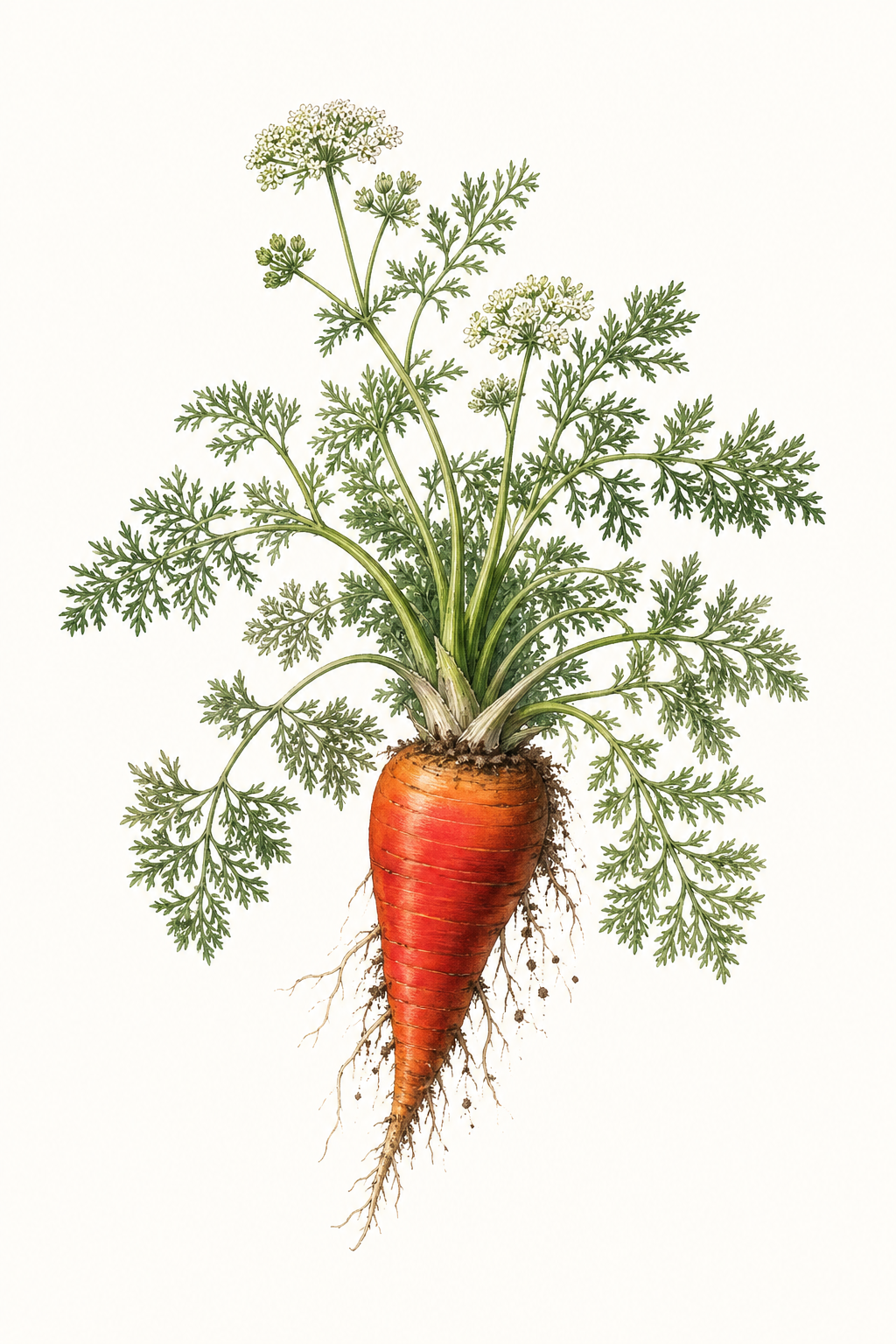
Sweet, earthy-sweet fragrance rises as the roots emerge—Chantenay Red Core forms short, stout carrots with a vivid red core and a…
Crop Dates
| Milestone | Date |
|---|---|
| Start Indoors | Direct Sow |
| Last Frost | Jan 1st |
| Transplant / Sow Outdoors | Jan 1st |
| Harvest Begins | Mar 12th |
| Harvest Ends | — |
Crop Details
| Trait | Value |
|---|---|
| Days to Maturity | 70 |
| Sun Requirements | Full Sun |
| Growth Habit | Taproot |
| Support Needed | None |
| Planting Depth | Surface |
| Germination Temp (°F) | 75 |
| Min Soil Temp (°F) | 40 |
| Min Night Temp (°F) | 35 |
| Harden Off (days) | Not Required |
Recommended Companions
Frequently Asked Questions
What pest or disease is most likely on Daucus carota (carrot) and how do I treat it?
How often should I water Chantenay Red Core carrots during the main growing phase?
How can I tell when Chantenay Red Core (Daucus carota) is ready to harvest?
Sweet, earthy-sweet fragrance rises as the roots emerge—Chantenay Red Core forms short, stout carrots with a vivid red core and a softly tapered shoulder that feels satisfyingly firm in the soil. The flesh is crisp and finely grained, delivering a balanced sweetness that shines in fresh salads and holds beautifully for roasting and vibrant color in sauces. A classic Chantenay for gardeners who want dependable, uniform roots at about 70 days, with a bold interior that makes every harvest look as good as it tastes.
Sowing Tips

Transplant Conditions
Wait until soil reaches 40°F and nights stay above 35°F before moving outdoors.
Expert Note

Direct-sow Chantenay Red Core carrots in loose, stone-free soil (or fine compost) as soon as the ground is workable, and thin early to prevent forked roots.