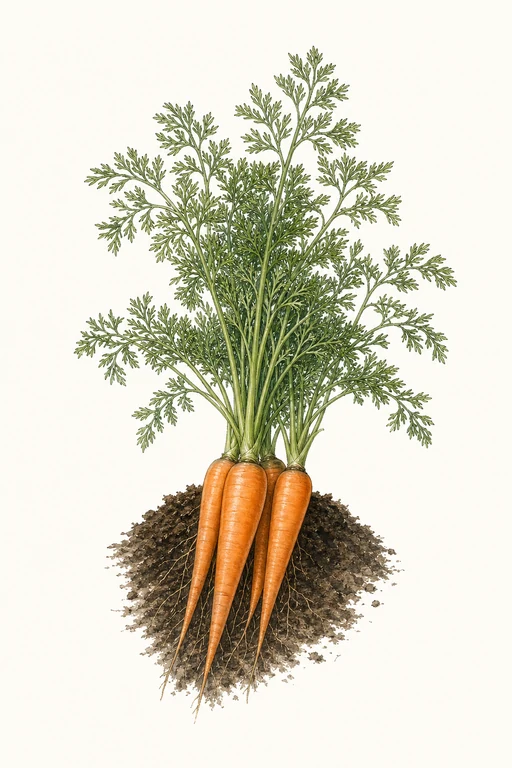
Napa
75d to harvest
Sweetly fragrant and richly colored, ‘Napa’ Nantes carrots unfurl into a smooth, tender core with a classic, gently tapered silhouette. Their flavor is bright and pleasantly sweet, with a crisp, fine-grained texture that holds its charm from garden-fresh to roasted favorites. Ideal for cool-season growing, ‘Napa’ delivers dependable, uniform roots at about 75 days—an elegant addition to beds and a reliable performer for fresh bunches and vibrant salads.
Crop Dates
Growing note: In frost-free Zone 13a, grow this cool-season crop during the cooler dry season (October–February).
| Milestone | Date |
|---|---|
| Start Indoors | — |
| Climate | Frost-Free Climate |
| Transplant / Sow Outdoors | Oct 1st |
| Harvest Begins | Dec 15th |
| Harvest Ends | Feb 28th |
Crop Details
| Trait | Value |
|---|---|
| Days to Maturity | 75 |
| Sun Requirements | Full Sun |
| Growth Habit | Rosette |
| Support Needed | None |
| Planting Depth | Normal |
| Germination Temp (°F) | 70 |
| Min Soil Temp (°F) | 45 |
| Min Night Temp (°F) | 28 |
| Harden Off (days) | Not Required |
Recommended Companions
Frequently Asked Questions
What pest or disease commonly affects Daucus carota var. sativus (Napa-style carrot) and how can I manage it?
Carrot rust fly is a common problem, causing tunneled roots and wilting; control it by covering beds with fine insect netting from just after thinning until harvest. If you see leaf spots or early blight-like spotting, remove badly affected tops and avoid overhead watering, since Apiaceae foliage stays wetter longer. Rotate away from Apiaceae crops for at least 3 years to reduce carryover of soil-borne issues.
How often should I water Daucus carota var. sativus during the main growing phase to keep roots forming properly?
During the main root-forming phase (about weeks 3–8 after sowing), keep the top 2–4 in (5–10 cm) of soil consistently evenly moist—typically about 1 in (2.5 cm) per week total depending on rainfall and heat. Water deeply rather than frequently to encourage steady root growth, and stop heavy watering near harvest to reduce cracking.