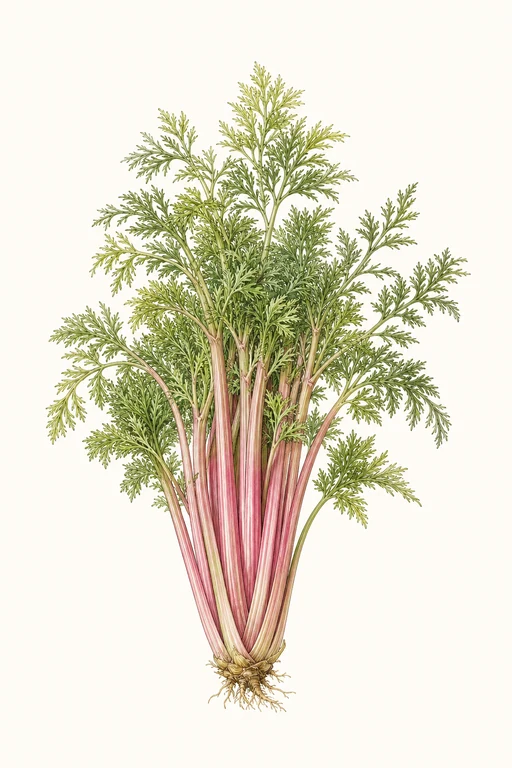
Pink Plume Celery
Celery
🌱 85d to harvest
Upright
Silken, plume-like stalks in a blush-pink to rosy-rose tone rise with a tender snap and a pleasantly crisp, clean celery fragranc…
Crop Dates
| Milestone | Date |
|---|---|
| Start Indoors | Oct 23rd |
| Last Frost | Jan 1st |
| Transplant / Sow Outdoors | Dec 25th |
| Harvest Begins | Mar 20th |
| Harvest Ends | — |
Crop Details
| Trait | Value |
|---|---|
| Days to Maturity | 85 |
| Sun Requirements | Part Sun |
| Growth Habit | Upright |
| Support Needed | None |
| Planting Depth | Normal |
| Germination Temp (°F) | 70 |
| Min Soil Temp (°F) | 45 |
| Min Night Temp (°F) | 30 |
| Harden Off (days) | 7 |
Recommended Companions
Frequently Asked Questions
What pest or disease most commonly affects Apium graveolens var. dulce (Pink Plume celery), and how can I control it?
Celery commonly suffers from early blight/leaf spot and sometimes septoria-like leaf spotting, especially when foliage stays wet. Water at the soil line, thin plants for airflow, remove spotted leaves early, and rotate away from Apiaceae beds when possible; if spots spread, use a labeled copper fungicide per package directions. Watch closely for aphids on tender new growth—rinse them off with a strong stream and treat with insecticidal soap if needed.
How often should I water Pink Plume celery during the main growing phase, and what soil moisture target should I keep?
During the main growth phase, keep the soil consistently moist (not soggy) to support dense, crisp stems—aim for evenly damp soil about 1–2 inches down. Water deeply 2–3 times per week in typical conditions, then adjust to maintain that moisture level; celery in warm part-sun dries quickly and will develop toughness if it goes dry. Mulch helps stabilize moisture, but avoid waterlogging, which increases leaf disease pressure.
How do I tell when Pink Plume celery is ready to harvest (Apium graveolens var. dulce)?
Harvest at about 85 days, when stalks are firm, well-filled, and reach the expected size for your planting density. Use your hand to gently feel the base—stalks should be crisp and substantial rather than thin and flexible. For the best flavor and texture, harvest before prolonged hot weather and before stems start to look loosely formed.