
Scarlet Nantes
Carrot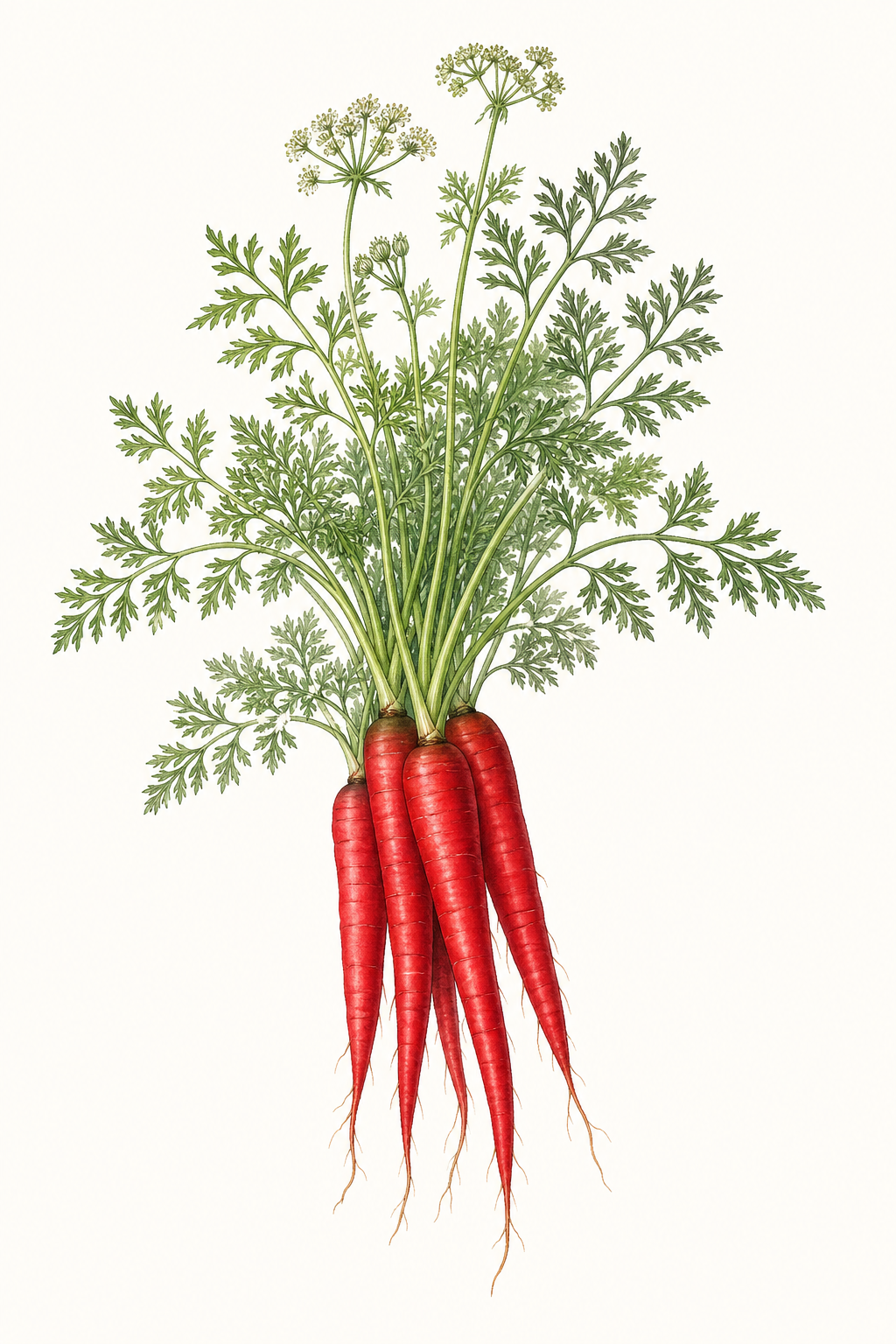
Sweetly fragrant, with a vivid scarlet exterior that glows like polished lacquer, Scarlet Nantes delivers tender, crisp roots tha…
Crop Dates
| Milestone | Date |
|---|---|
| Start Indoors | Direct Sow |
| Last Frost | Jan 1st |
| Transplant / Sow Outdoors | Jan 1st |
| Harvest Begins | Mar 7th |
| Harvest Ends | — |
Crop Details
| Trait | Value |
|---|---|
| Days to Maturity | 65 |
| Sun Requirements | Full Sun |
| Growth Habit | Taproot |
| Support Needed | None |
| Planting Depth | Normal |
| Germination Temp (°F) | 75 |
| Min Soil Temp (°F) | 45 |
| Min Night Temp (°F) | 28 |
| Harden Off (days) | Not Required |
Recommended Companions
Frequently Asked Questions
What’s a common disease or pest for Daucus carota (Scarlet Nantes) and how can I control it?
How often should I water Scarlet Nantes during the main growing phase?
How do I tell when Scarlet Nantes is ready to harvest (65 days)?
Sweetly fragrant, with a vivid scarlet exterior that glows like polished lacquer, Scarlet Nantes delivers tender, crisp roots that stay pleasantly fine-grained from garden to table. The classic Nantes profile—slender and gently tapered—offers a juicy bite and a bright, carrot-sweet flavor that shines in fresh salads, quick roasting, and vibrant sauces. Grow it for color you can taste, and for roots that lift cleanly for effortless harvest at about 65 days.
Sowing Tips

Transplant Conditions
Wait until soil reaches 45°F and nights stay above 28°F before moving outdoors.
Expert Note

Sow directly in evenly moist soil and avoid thinning too late—coreless Nantes types form best with consistent moisture and minimal root disturbance.