
Temperate Tulsi
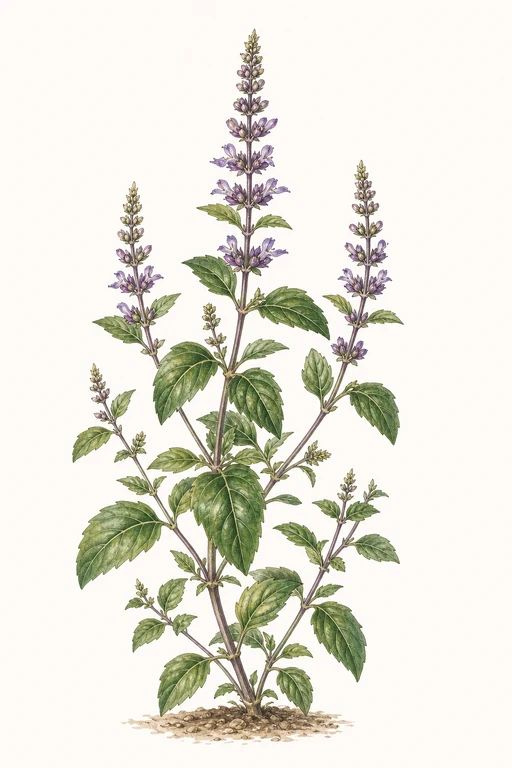
Aromatic and richly fragrant from the first pinch, Temperate Tulsi fills the air with a cool, minty lift and a warm, clove-like depth. Leaves mature to a vivid, medium-green sheen with a tender, slightly fuzzy texture that holds its character through drying and steeping for soothing herbal infusions. Grow Temperate Tulsi for its enduring, perennial presence and its signature holy-basil personality—ideal for fragrant tea blends, aromatic sachets, and flavorful herbal oils.
Crop Dates
| Milestone | Date |
|---|---|
| Start Indoors | — |
| Climate | Frost-Free Climate |
| Transplant / Sow Outdoors | Oct 1st |
| Harvest Begins | Nov 30th |
| Harvest Ends | Feb 28th |
Crop Details
| Trait | Value |
|---|---|
| Days to Maturity | 60 |
| Sun Requirements | Full Sun |
| Growth Habit | Upright |
| Support Needed | None |
| Planting Depth | Normal |
| Germination Temp (°F) | 70 |
| Min Soil Temp (°F) | 60 |
| Min Night Temp (°F) | 35 |
| Harden Off (days) | 7 |
Recommended Companions


Frequently Asked Questions
What pest or disease most commonly affects Ocimum tenuiflorum (temperate tulsi), and how do I control it at home?
How often should I water temperate tulsi during its main growing phase?
Aromatic and richly fragrant from the first pinch, Temperate Tulsi fills the air with a cool, minty lift and a warm, clove-like depth. Leaves mature to a vivid, medium-green sheen with a tender, slightly fuzzy texture that holds its character through drying and steeping for soothing herbal infusions. Grow Temperate Tulsi for its enduring, perennial presence and its signature holy-basil personality—ideal for fragrant tea blends, aromatic sachets, and flavorful herbal oils.
Sowing Tips

Soil Temperature
Direct sow or transplant when soil at planting depth holds 60°F for reliable germination and early growth.
Expert Note

In cooler regions, grow temperate tulsi in full sun and transplant only after nights stay safely above 35–40°F, then pinch tops lightly to encourage bushiness.