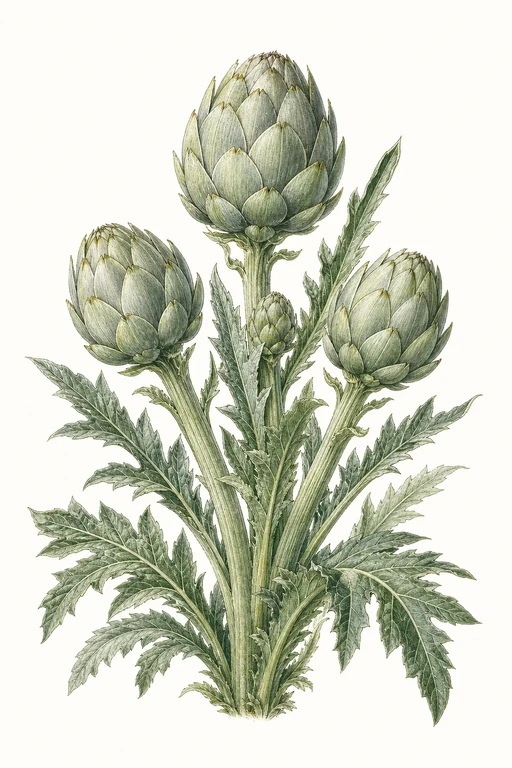
Artichoke
🌱 150d to harvest
Clumping
Unfurling into regal, globe-like buds with a silken, silvery-green sheen, Artichoke offers a tender, richly savory promise in eve…
Crop Dates
| Milestone | Date |
|---|---|
| Start Indoors | Oct 9th |
| Last Frost | Jan 1st |
| Transplant / Sow Outdoors | Dec 18th |
| Harvest Begins | May 17th |
| Harvest Ends | — |
Crop Details
| Trait | Value |
|---|---|
| Days to Maturity | 150 |
| Sun Requirements | Full Sun |
| Growth Habit | Clumping |
| Support Needed | None |
| Planting Depth | Normal |
| Germination Temp (°F) | 70 |
| Min Soil Temp (°F) | 40 |
| Min Night Temp (°F) | 35 |
| Harden Off (days) | 7 |
Recommended Companions
Frequently Asked Questions
What pest or disease commonly affects artichokes (Cynara cardunculus), and what should I do?
Artichokes are especially prone to gray mold (Botrytis) during cool, damp weather, which shows up as fuzzy gray growth on buds and leaves. Remove and discard affected leaves or buds immediately, improve airflow by spacing plants, and avoid wetting the foliage when watering. If the problem keeps returning, apply a labeled fungicide appropriate for edible plants in your area and keep the bed from staying soggy.
How often should I water artichokes during the main growing phase?
During active growth, keep soil evenly moist but not waterlogged—aim for about 1–2 inches of water per week, adjusting for heat and rainfall. Water deeply so moisture reaches the crown and root zone, and let the top 1–2 inches of soil dry slightly between waterings to prevent rot. Consistent moisture helps produce firm, well-filled heads; irregular watering can lead to loose or poor-quality buds.
How can I tell when artichokes are ready to harvest?
Harvest when the bud is fully sized but before the inner bracts loosen—pick when the bracts are tight and the tips are still mostly closed. In Cynara cardunculus, heads are typically ready around 150 days from transplanting or sowing (timing varies by start method and temperature). Use a sharp knife to cut the bud 1–3 inches below the base, and expect additional smaller side shoots after the first harvest.