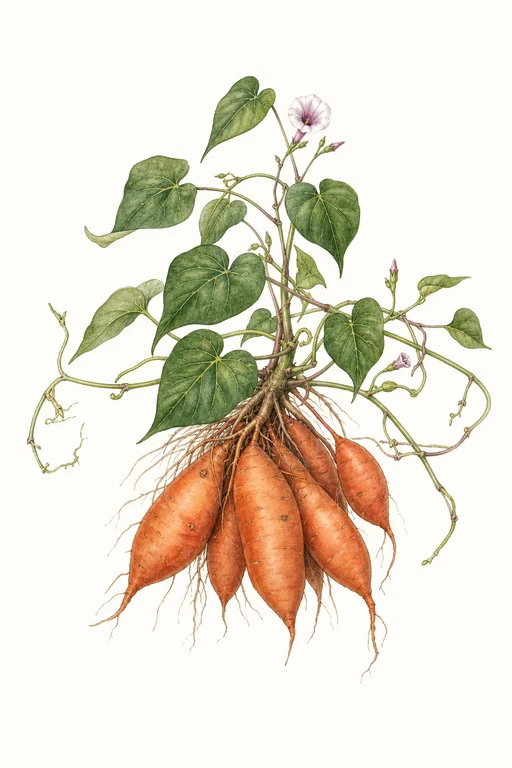
Covington
Sweet Potato
🌱 120d to harvest
Vine
Velvety, honeyed orange flesh—deeply saturated and beautifully smooth—defines Covington Sweet Potato at maturity. Its tender, cre…
Crop Dates
| Milestone | Date |
|---|---|
| Start Indoors | Direct Sow |
| Last Frost | Jan 1st |
| Transplant / Sow Outdoors | Feb 26th |
| Harvest Begins | Jun 26th |
| Harvest Ends | — |
Crop Details
| Trait | Value |
|---|---|
| Days to Maturity | 120 |
| Sun Requirements | Full Sun |
| Growth Habit | Vine |
| Support Needed | None |
| Planting Depth | Normal |
| Germination Temp (°F) | 80 |
| Min Soil Temp (°F) | 60 |
| Min Night Temp (°F) | 55 |
| Harden Off (days) | Not Required |
Recommended Companions
Frequently Asked Questions
What pest or disease commonly affects Ipomoea batatas (sweet potato) in home gardens, and how can I control it?
Watch for sweet potato weevil and root/plant rot, which show up as wilting vines, soft or damaged storage roots, and tunneling near the root crown. Dig up and destroy any severely rotted roots, and keep the growing area free of plant debris; rotate away from Ipomoea/Convolvulaceae crops for at least 2–3 years. If you see active weevil damage, remove affected roots promptly and avoid replanting slips from infested stock.
How often should I water Ipomoea batatas during the main growing phase to form good storage roots?
During the main bulking period (roughly mid-season through about 90–110 days), water deeply to moisten the root zone, then let the top 1–2 inches of soil dry before the next watering. Aim for about 1 inch of water per week as a starting point, adjusting for heat and rainfall, because consistently soggy beds can trigger rot and reduce root quality. Stop heavy watering about 1–2 weeks before harvest to help skins set and reduce splitting.
How can I tell when Ipomoea batatas is ready to harvest?
Harvest at about 120 days after slips were planted, when vines start to yellow and the tuberous roots have filled out. Carefully dig one or two roots first—mature sweet potatoes should be firm with skins that don’t rub off easily when gently wiped. Use the first light frost as a boundary: if frost is forecast, harvest immediately to prevent cold-damage.