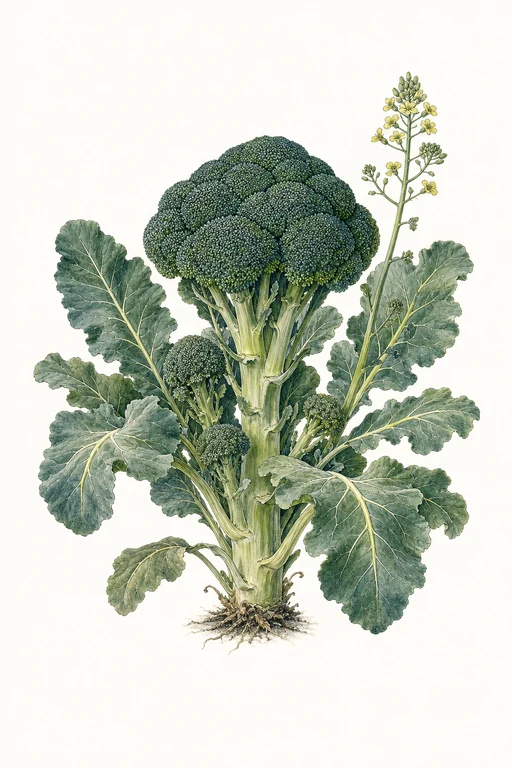
Imperial
68d to harvest
Velvety, deep-blue green curds form a tight, regal dome on sturdy stems—lush to the eye and richly flavored in the garden. Imperial delivers a dense, fine-textured head with a pleasing snap, plus dependable side shoots for extended harvest. Ideal for roasting, steaming, and turning into creamy sauces, this is a standout broccoli for gardeners who want bold color and consistently satisfying texture from one planting.
Crop Dates
Growing note: In frost-free Zone 13b, grow this cool-season crop during the cooler dry season (October–February).
| Milestone | Date |
|---|---|
| Start Indoors | — |
| Climate | Frost-Free Climate |
| Transplant / Sow Outdoors | Oct 1st |
| Harvest Begins | Dec 8th |
| Harvest Ends | Feb 28th |
Crop Details
| Trait | Value |
|---|---|
| Days to Maturity | 68 |
| Sun Requirements | Full Sun |
| Growth Habit | Rosette |
| Support Needed | None |
| Planting Depth | Normal |
| Germination Temp (°F) | 45 |
| Min Soil Temp (°F) | 40 |
| Min Night Temp (°F) | 32 |
| Harden Off (days) | 6 |
Recommended Companions
Frequently Asked Questions
How often should I water during the main growing phase for Brassica oleracea var. italica, and what soil moisture level should I keep?
During head (curd) formation, keep soil consistently evenly moist—aim for the top 1 inch to stay damp, not soggy. Water deeply about 2–3 times per week depending on heat and rainfall, and reduce frequency only if the soil is staying wet longer than a day. Uneven watering can lead to loose, stressed curds and increased susceptibility to diseases.
How can I tell when Brassica oleracea var. italica (“imperial”) is ready to harvest?
Harvest when the curd is firm and tightly budded, with the individual florets still compact—before the surface starts to separate and yellow. Typical timing is around 68 days from transplanting/seedling establishment; in practice, harvest at the first clear window of tightness rather than waiting for size alone. Cut the main head with 6–8 in (15–20 cm) of stem, and keep an eye out for smaller side shoots that can be harvested after the main cut.