
Kaleidoscope Mix
Carrot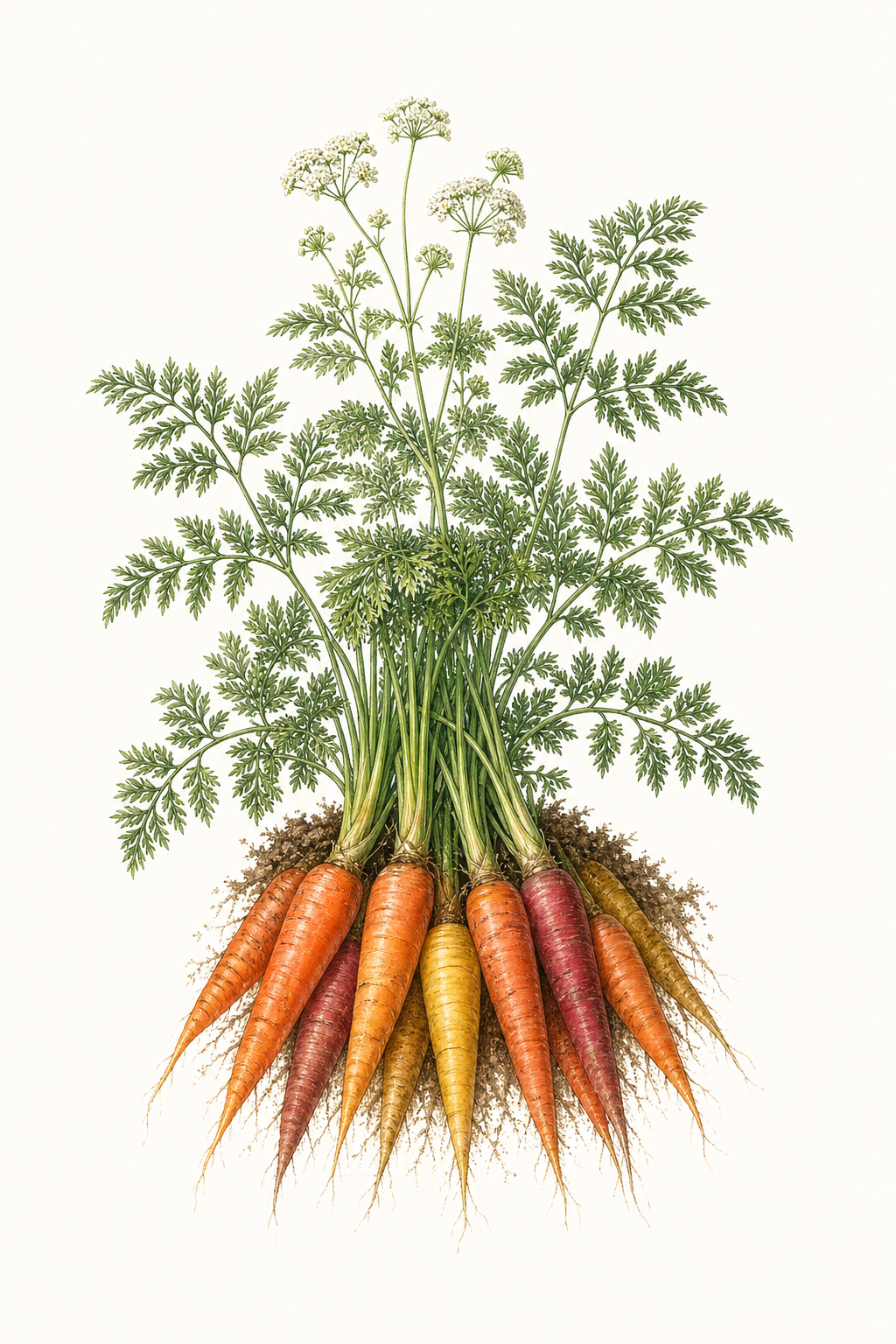
A living rainbow in the garden—Kaleidoscope Mix Danvers carrots unfurl with a vivid, candy-striped brilliance that’s as striking …
Crop Dates
| Milestone | Date |
|---|---|
| Start Indoors | Direct Sow |
| Last Frost | Jan 1st |
| Transplant / Sow Outdoors | Jan 1st |
| Harvest Begins | Mar 12th |
| Harvest Ends | — |
Crop Details
| Trait | Value |
|---|---|
| Days to Maturity | 70 |
| Sun Requirements | Full Sun |
| Growth Habit | Rosette |
| Support Needed | None |
| Planting Depth | Surface |
| Germination Temp (°F) | 75 |
| Min Soil Temp (°F) | 40 |
| Min Night Temp (°F) | 28 |
| Harden Off (days) | Not Required |
Recommended Companions
Frequently Asked Questions
What’s a common pest or disease for Daucus carota (carrot) and how can I fix it at home?
How often should I water Daucus carota during the main growing phase?
How do I tell when Daucus carota is ready to harvest?
A living rainbow in the garden—Kaleidoscope Mix Danvers carrots unfurl with a vivid, candy-striped brilliance that’s as striking as it is delicious. Expect crisp, tender roots with a sweet, carrot-forward flavor and a smooth, fine-grained texture that shines whether you’re enjoying them straight from the patch or turning them into colorful favorites for salads, roasting, and vibrant pickles. Grow this 70-day mix for a front-row display of warm orange, rosy red, and golden tones that mature in a classic Danvers silhouette—uniform, dependable, and irresistibly photogenic.
Sowing Tips

Transplant Conditions
Wait until soil reaches 40°F and nights stay above 28°F before moving outdoors.
Expert Note

For the best Kaleidoscope-style color and shape, keep the seedbed consistently moist until emergence and thin early to avoid twisted roots.