
Nantes Scarlet
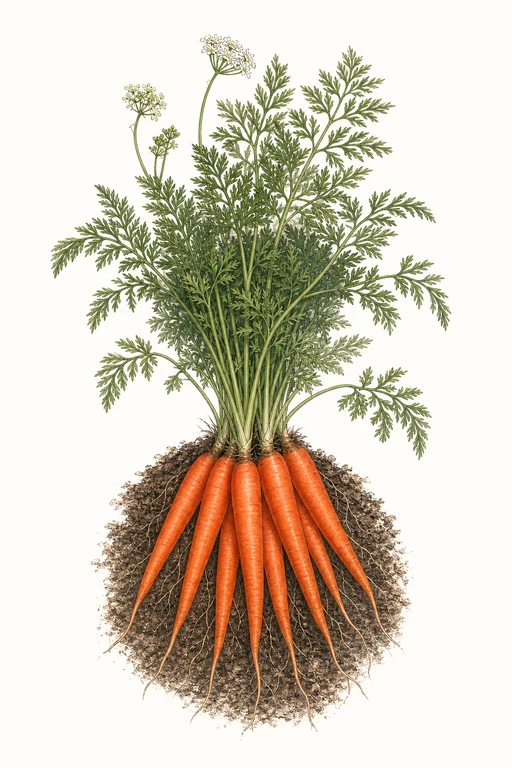
Sink your spoon into the vivid sweetness of Nantes Scarlet—its roots ripen to a rich, warm scarlet-orange with a fine, tapered silhouette and a crisp, tender bite. The flesh stays delightfully smooth and juicy, with a classic Nantes texture that shines in fresh salads and quick-roasting trays, or shines through in bright sauces and vivid pickles. A cool-season favorite for gardeners who love reliable, uniform roots that look as striking as they taste.
Crop Dates
| Milestone | Date |
|---|---|
| Start Indoors | — |
| Climate | Frost-Free Climate |
| Transplant / Sow Outdoors | Oct 1st |
| Harvest Begins | Dec 15th |
| Harvest Ends | Feb 28th |
Crop Details
| Trait | Value |
|---|---|
| Days to Maturity | 75 |
| Sun Requirements | Full Sun |
| Growth Habit | Rosette |
| Support Needed | None |
| Planting Depth | Surface |
| Germination Temp (°F) | 70 |
| Min Soil Temp (°F) | 45 |
| Min Night Temp (°F) | 28 |
| Harden Off (days) | Not Required |
Recommended Companions


Frequently Asked Questions
How often should I water Nantes Scarlet carrots during the main growing phase?
How can I tell when Nantes Scarlet carrots (Daucus carota var. sativus) are ready to harvest?
Sink your spoon into the vivid sweetness of Nantes Scarlet—its roots ripen to a rich, warm scarlet-orange with a fine, tapered silhouette and a crisp, tender bite. The flesh stays delightfully smooth and juicy, with a classic Nantes texture that shines in fresh salads and quick-roasting trays, or shines through in bright sauces and vivid pickles. A cool-season favorite for gardeners who love reliable, uniform roots that look as striking as they taste.
Sowing Tips

Soil Temperature
Direct sow or transplant when soil at planting depth holds 45°F for reliable germination and early growth.
Expert Note

For Nantes-type carrots, keep the seedbed consistently moist until germination and thin early to prevent root forking.