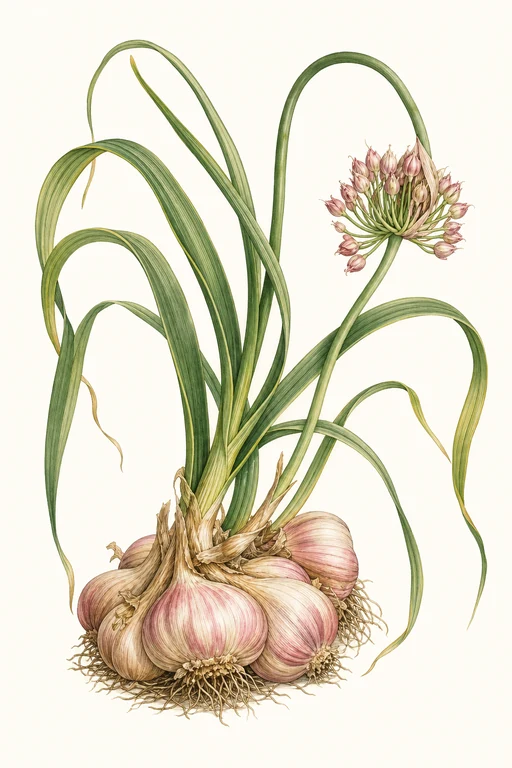
Nootka Rose
210d to harvest
Fragrant and richly pungent, Nootka Rose softneck garlic forms handsome bulbs wrapped in rosy-tinged skins that glow like antique satin in the garden light. Expect a creamy, medium-to-large clove structure with a smooth, easy-to-separate texture—ideal for building bold flavor in everyday preparations. Nootka Rose’s dependable, long-season growth (about 210 days) rewards home gardeners with storage-ready bulbs that keep their character far beyond harvest, making it a favorite for roasting, sauces, and pickling.
Crop Dates
Growing note: In frost-free Zone 13b, grow this cool-season crop during the cooler dry season (October–February).
| Milestone | Date |
|---|---|
| Start Indoors | — |
| Climate | Frost-Free Climate |
| Transplant / Sow Outdoors | Oct 1st |
| Harvest Begins | Feb 28th |
| Harvest Ends | Feb 28th |
Crop Details
| Trait | Value |
|---|---|
| Days to Maturity | 210 |
| Sun Requirements | Full Sun |
| Growth Habit | Bulbing |
| Support Needed | None |
| Planting Depth | Normal |
| Germination Temp (°F) | 50 |
| Min Soil Temp (°F) | 40 |
| Min Night Temp (°F) | 28 |
| Harden Off (days) | Not Required |
Recommended Companions
Frequently Asked Questions
What pest or disease commonly affects Allium sativum (Nootka rose) and what should I do?
Garlic (Allium sativum) commonly suffers from white rot (Sclerotium cepivorum), which causes yellowing, wilting, and white fungal growth at the base near harvest. Remove and discard affected plants, don’t replant garlic or other alliums in the same bed for many years, and sanitize tools; if you catch it early, improving drainage and avoiding overhead watering can slow spread. Use clean bulbs for planting the next season and keep the soil from staying waterlogged, which favors disease development.
How often should I water Allium sativum during the main growing phase?
During active growth (after shoots establish and before bulbs start swelling), keep soil consistently moist but not soggy—about 1 inch of water per week, adjusted for rainfall. Water deeply when the top 1 inch of soil dries, then allow excess moisture to drain so the bulbs don’t rot. When you see tops begin to yellow and bulb skins thicken, reduce watering to avoid splitting and to help curing for storage.