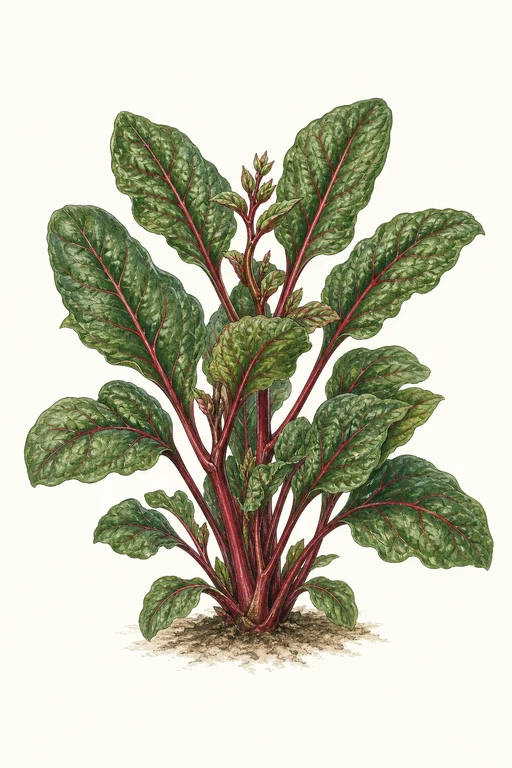
Red Cardinal
Spinach
🌱 40d to harvest
Rosette
Tender, fast-growing leaves of Red Cardinal unfurl in a vivid, wine-red to crimson-green tapestry—lush and velvety to the touch, …
Crop Dates
| Milestone | Date |
|---|---|
| Start Indoors | Dec 4th |
| Last Frost | Jan 1st |
| Transplant / Sow Outdoors | Dec 25th |
| Harvest Begins | Feb 3rd |
| Harvest Ends | — |
Crop Details
| Trait | Value |
|---|---|
| Days to Maturity | 40 |
| Sun Requirements | Part Sun |
| Growth Habit | Rosette |
| Support Needed | None |
| Planting Depth | Normal |
| Germination Temp (°F) | 70 |
| Min Soil Temp (°F) | 40 |
| Min Night Temp (°F) | 32 |
| Harden Off (days) | 6 |
Recommended Companions
Frequently Asked Questions
What pest or disease problem commonly affects Spinacia oleracea (red Cardinal spinach), and how do I control it?
Watch for downy mildew and leaf spot, especially when leaves stay wet from evening watering or humid weather. Remove badly spotted leaves and improve airflow by thinning to good spacing; water at the soil line so foliage dries quickly. If conditions stay favorable for disease, use a labeled fungicide that’s appropriate for leafy greens and follow label timing closely to avoid harvest delays.
How often should I water Spinacia oleracea during the main growing phase, and what soil moisture level should I maintain?
During active leaf growth (after seedlings establish, roughly weeks 2–5), keep the soil consistently moist but not soggy—aim for evenly damp soil 1–2 inches down. Water about 1–2 times per week depending on heat and container vs. in-ground, increasing frequency when the top inch dries out. Avoid letting the soil swing between dry and wet because spinach can become tough and more prone to stress.
How can I tell when red Cardinal spinach (Spinacia oleracea) is ready to harvest?
Harvest about 40 days from sowing, starting when leaves are large enough to pick—typically when outer leaves are 4–6 inches long. Pick in the morning for best texture, and use the “cut-and-come-again” method by snipping outer leaves while leaving the crown intact for continued leaf production. If you see flower stalks forming or leaves taste bitter, harvest immediately and expect the plant to slow as it bolts.