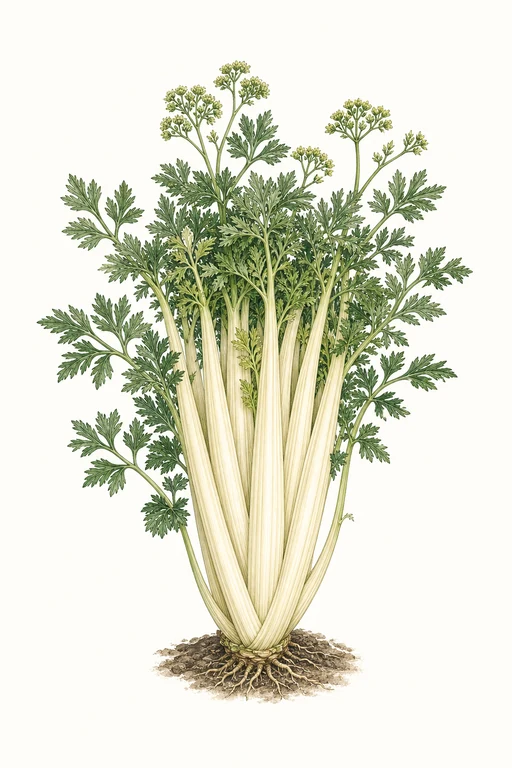
Self-Blanching Celery
80d to harvest
Crisp as fresh-cut rain, Self-Blanching Celery forms tender, pale stalks with a naturally mild, sweet bite and a clean, juicy snap. The self-blanching habit keeps color light and flavor refined without the usual fuss, delivering a velvety texture that stays pleasantly crisp from garden to table. Ideal for snacking, brightening salads, and lending its gentle character to soups, stews, and savory sauces—an elegant, dependable celery for the home grower who loves finesse.
Crop Dates
Growing note: In frost-free Zone 13b, grow this cool-season crop during the cooler dry season (October–February).
| Milestone | Date |
|---|---|
| Start Indoors | — |
| Climate | Frost-Free Climate |
| Transplant / Sow Outdoors | Oct 1st |
| Harvest Begins | Dec 20th |
| Harvest Ends | Feb 28th |
Crop Details
| Trait | Value |
|---|---|
| Days to Maturity | 80 |
| Sun Requirements | Part Sun |
| Growth Habit | Upright |
| Support Needed | None |
| Planting Depth | Normal |
| Germination Temp (°F) | 70 |
| Min Soil Temp (°F) | 40 |
| Min Night Temp (°F) | 28 |
| Harden Off (days) | 7 |
Recommended Companions
Frequently Asked Questions
What pest or disease most commonly affects self-blanching celery (Apium graveolens var. dulce), and how can I prevent it?
Celery commonly suffers from early blight/leaf spot and a bacterial “soft rot” problem that shows up as dark, water-soaked spots that spread in humid weather. Keep airflow by thinning to the recommended spacing, avoid wetting the foliage when watering, and remove affected leaves immediately; if spots start spreading, use a labeled copper fungicide for celery/leafy greens and repeat per label intervals. Also keep the crown at soil level (not buried) to reduce rot risk, and rotate beds so celery family crops aren’t grown in the same spot year after year.
During the main growing phase, how often should I water self-blanching celery to keep it from becoming tough or bitter?
In the main 60–80 day growing window, water deeply enough to keep the root zone consistently moist—about 1 inch (2.5 cm) per week total, split into 2–3 watering days if it’s hot or windy. Let the soil surface dry slightly between waterings, but don’t allow the soil to swing to dry: celery will get stringy and bitter after moisture stress. Mulch to hold moisture and check that the top 3–4 inches (7–10 cm) stay damp, especially after transplanting when plants are establishing.