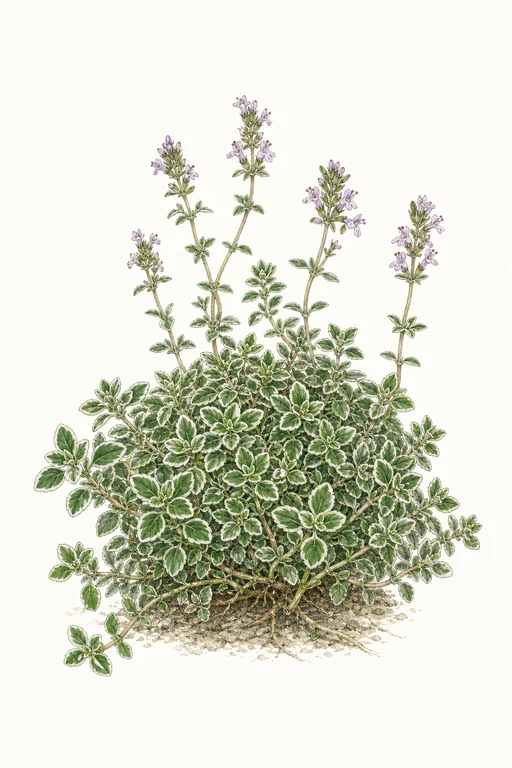
Silver-Edged Lemon Thyme
60d to harvest
Sunlit and silvery, Silver-Edged Lemon Thyme releases a bright lemony perfume the moment you brush its foliage—an aromatic whisper with a clean, herbaceous backbone. The leaves are small and tightly held, edged in cool silver and backed by a vivid green center, creating a dense, tidy mat that’s as beautiful as it is fragrant. Grow it for fresh fragrance in garden beds and containers, and for flavor-forward infusions, herb blends, and savory seasonings that benefit from its vivid citrus character.
Crop Dates
Growing note: In frost-free Zone 13b, grow this cool-season crop during the cooler dry season (October–February).
| Milestone | Date |
|---|---|
| Start Indoors | — |
| Climate | Frost-Free Climate |
| Transplant / Sow Outdoors | Oct 1st |
| Harvest Begins | Nov 30th |
| Harvest Ends | Feb 28th |
Crop Details
| Trait | Value |
|---|---|
| Days to Maturity | 60 |
| Sun Requirements | Full Sun |
| Growth Habit | Upright |
| Support Needed | None |
| Planting Depth | Normal |
| Germination Temp (°F) | 70 |
| Min Soil Temp (°F) | 60 |
| Min Night Temp (°F) | 50 |
| Harden Off (days) | 7 |
Recommended Companions
Frequently Asked Questions
What pest or disease issue commonly affects Thymus citriodorus (silver-edged lemon thyme), and how can I fix it?
Silver-edged lemon thyme commonly suffers from root rot and stem/collar problems when soils stay wet, especially in cool, poorly drained spots. Grow it in sharply draining soil, water only when the top 1–2 cm feels dry, and remove any plants with dark, mushy roots to prevent spread. If you see persistent gray fuzz or dieback, improve airflow and keep foliage dry, then cut back affected stems to healthy growth.
How do I tell when silver-edged lemon thyme is ready to harvest?
Harvest once plants are established and at least about 8–10 inches (20–25 cm) tall, typically around 60 days from sowing for first cuts. Pick stems when they have lots of fragrant leaves but before heavy flowering; the essential oils are usually most intense just before blooms open. Snip non-woody growth (top 1/3 of stems), leaving the lower parts intact so the plant can re-sprout for repeat harvests.