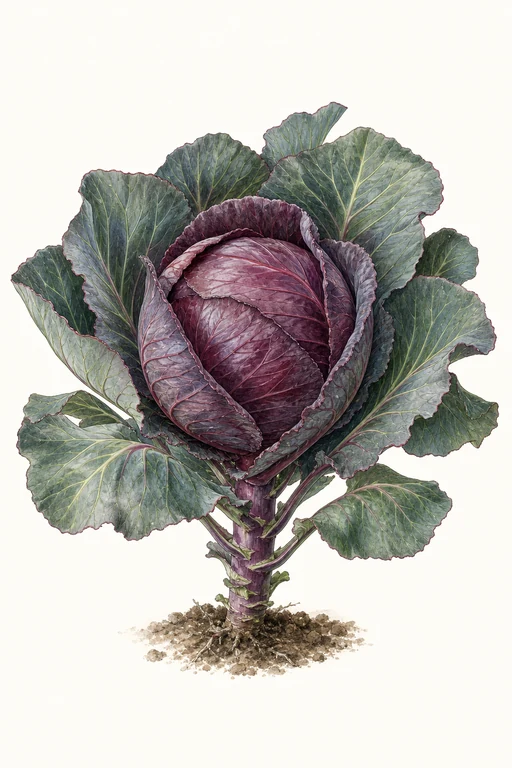
Super Red 80
85d to harvest
Crisp, jewel-toned heads arrive in a rich, velvety red that deepens as they mature—an eye-catching color with a satisfying crunch. Super Red 80 forms tightly wrapped, heavy cabbages with a fine, dense texture and a pleasantly sweet, cabbage-forward flavor that holds its character beautifully. Ideal for bold salads, vibrant slaws, and tangy fermented or pickled preparations where color and crunch are the stars.
Crop Dates
Growing note: In frost-free Zone 13b, grow this cool-season crop during the cooler dry season (October–February).
| Milestone | Date |
|---|---|
| Start Indoors | — |
| Climate | Frost-Free Climate |
| Transplant / Sow Outdoors | Oct 1st |
| Harvest Begins | Dec 25th |
| Harvest Ends | Feb 28th |
Crop Details
| Trait | Value |
|---|---|
| Days to Maturity | 85 |
| Sun Requirements | Full Sun |
| Growth Habit | Rosette |
| Support Needed | None |
| Planting Depth | Normal |
| Germination Temp (°F) | 45 |
| Min Soil Temp (°F) | 40 |
| Min Night Temp (°F) | 30 |
| Harden Off (days) | 6 |
Recommended Companions
Frequently Asked Questions
What’s the most common disease pest issue for Brassica oleracea var. capitata (cabbage) like ‘Super Red 80’, and how do I control it?
Cabbage commonly suffers from cabbage worms (imported cabbageworm/diamondback) that chew holes in leaves and can rapidly devastate heads. Inspect plants 2–3 times per week and hand-pick caterpillars early, then treat with Bacillus thuringiensis (Bt) when you first see active feeding (follow label rates; reapply after heavy rain). For disease, watch for black rot and other brassica leaf issues—remove infected outer leaves immediately and avoid wetting foliage to reduce spread.
How often should I water ‘Super Red 80’ during the main growing phase so heads form properly?
During head formation (roughly mid-season to the last 3–4 weeks before harvest), keep soil evenly moist but not waterlogged, aiming for about 1 inch of water per week total from rainfall and irrigation. Water deeply 1–2 times weekly rather than frequent light sprinkling, and check moisture 2–3 inches down—if it’s dry there, water. Avoid letting the soil swing from very dry to very wet, which can contribute to splitting and poor head tightness.