
Ananas
Muskmelon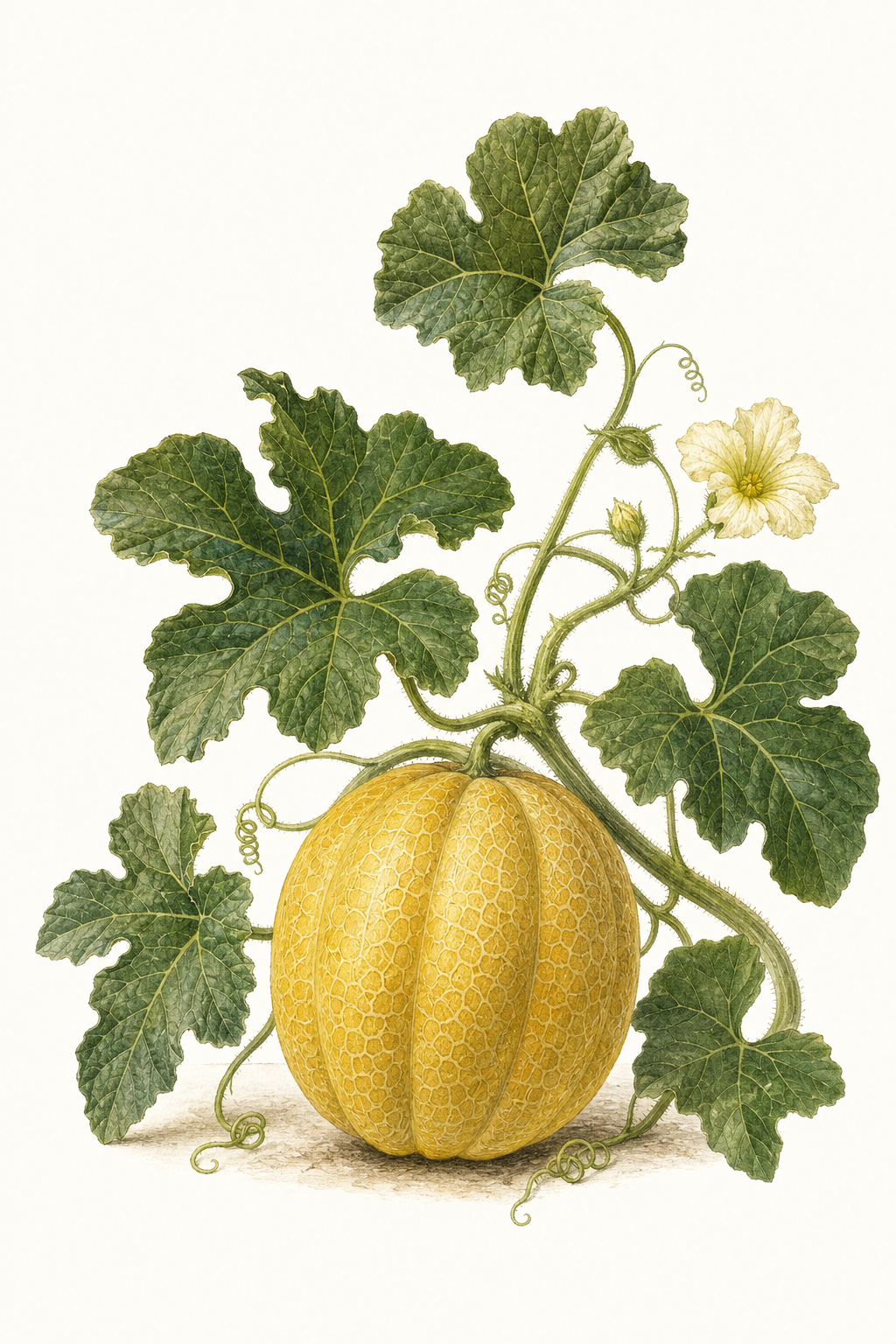
Fragrant as a ripe tropical breeze, Ananas muskmelon brings a honeyed aroma and a richly sweet, sun-warmed flavor to the garden. …
Crop Dates
| Milestone | Date |
|---|---|
| Start Indoors | May 18th |
| Last Frost | May 25th |
| Transplant / Sow Outdoors | Jun 1st |
| Harvest Begins | Aug 25th |
| Harvest Ends | Aug 29th |
Crop Details
| Trait | Value |
|---|---|
| Days to Maturity | 85 |
| Sun Requirements | Full Sun |
| Growth Habit | Vine |
| Support Needed | Trellis |
| Planting Depth | Normal |
| Germination Temp (°F) | 80 |
| Min Soil Temp (°F) | 65 |
| Min Night Temp (°F) | 55 |
| Harden Off (days) | 12 |
Recommended Companions
Frequently Asked Questions
How do I handle mealybugs or scale on pineapple plants (Ananas) at home?
How often should I water pineapple during the main growing phase (after planting)?
How can I tell when my pineapple (Ananas) is ready to harvest around day ~85?
Fragrant as a ripe tropical breeze, Ananas muskmelon brings a honeyed aroma and a richly sweet, sun-warmed flavor to the garden. Expect a tender, juicy flesh with a smooth, melting texture and a distinctive, golden glow that feels as good as it tastes. Grow Ananas for standout fresh enjoyment and for luscious fruit-forward preserves and pickles that capture its bright, aromatic character at peak ripeness.
Sowing Tips

Transplant Conditions
Wait until soil reaches 65°F and nights stay above 55°F before moving outdoors. Harden off for 12 days first.

Direct Sow Preferred
Sensitive roots — does not transplant well. If starting indoors, use biodegradable pots and disturb roots as little as possible when moving outdoors.
Expert Note

Because this is a cucurbit, start seedlings in individual containers (or direct-sow) to minimize root disturbance, and transplant only when nights are reliably warm.