
Butternut Rugosa
Winter Squash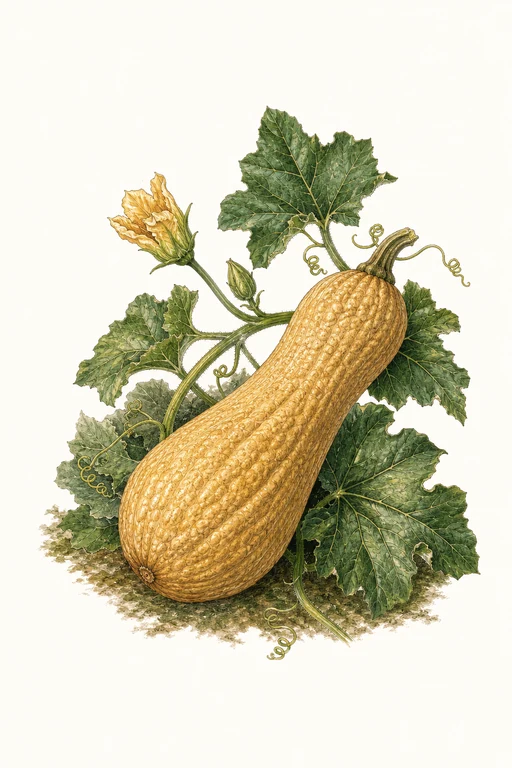
Butternut Rugosa unfurls a rich, warm fragrance from the moment the fruit begins to set—then delivers a deeply satisfying, velvet…
Crop Dates
| Milestone | Date |
|---|---|
| Start Indoors | May 25th |
| Last Frost | May 25th |
| Transplant / Sow Outdoors | Jun 8th |
| Harvest Begins | Sep 11th |
| Harvest Ends | Aug 29th |
Crop Details
| Trait | Value |
|---|---|
| Days to Maturity | 95 |
| Sun Requirements | Full Sun |
| Growth Habit | Vine |
| Support Needed | Trellis |
| Planting Depth | Normal |
| Germination Temp (°F) | 70 |
| Min Soil Temp (°F) | 65 |
| Min Night Temp (°F) | 55 |
| Harden Off (days) | 10 |
Recommended Companions

Frequently Asked Questions
What pest or disease commonly affects Cucurbita moschata (butternut) and how can I control it?
How often should I water Cucurbita moschata during the main growing phase?
How do I tell when my Cucurbita moschata (butternut) is ready to harvest at ~95 days?
Butternut Rugosa unfurls a rich, warm fragrance from the moment the fruit begins to set—then delivers a deeply satisfying, velvety sweetness at maturity. Its thick, rugged skin carries a distinctive rugose, softly ridged texture, while the interior flesh turns a saturated golden-orange that roasts to a spoon-tender creaminess. Grow it for hearty winter meals: perfect for roasting, silky purées, and spoonable sauces, with a flavor that lingers like browned butter and toasted squash.
Sowing Tips

Transplant Conditions
Wait until soil reaches 65°F and nights stay above 55°F before moving outdoors. Harden off for 10 days first.

Direct Sow Preferred
Sensitive roots — does not transplant well. If starting indoors, use biodegradable pots and disturb roots as little as possible when moving outdoors.
Expert Note

For best storage and flavor, wait to harvest until the rind is fully hard and the stem is dry, then cure warm and dry for 7–14 days.