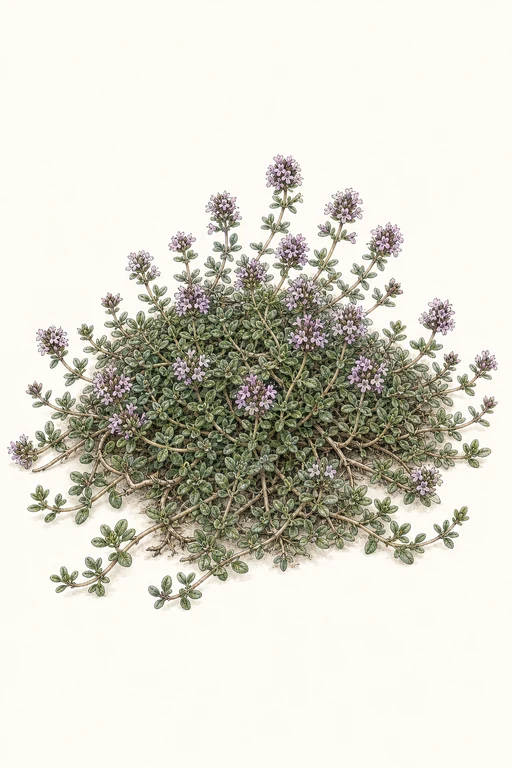
Doone Valley Thyme
90d to harvest
Breathe in the unmistakable, cool-mint perfume of Doone Valley Thyme—an aromatic creeping selection with a low, spreading habit and finely textured leaves that release their fragrance at every touch. At maturity it forms a dense, mat-like carpet with tiny, lavender-pink blooms that add both color and pollinator appeal. Ideal for garden borders and rockeries, it’s a fragrant cornerstone for flavor-forward plantings and aromatic bundles throughout the growing season.
Crop Dates
| Milestone | Date |
|---|---|
| Start Indoors | Apr 13th |
| Last Frost | May 25th |
| Transplant / Sow Outdoors | May 18th |
| Harvest Begins | Aug 16th |
| Harvest Ends | Aug 29th |
Crop Details
| Trait | Value |
|---|---|
| Days to Maturity | 90 |
| Sun Requirements | Full Sun |
| Growth Habit | Spreading |
| Support Needed | None |
| Planting Depth | Surface |
| Germination Temp (°F) | 65 |
| Min Soil Temp (°F) | 45 |
| Min Night Temp (°F) | 35 |
| Harden Off (days) | 7 |
Recommended Companions
Frequently Asked Questions
What pest or disease commonly affects Thymus serpyllum (creeping thyme), and how do I treat it?
The most common problem is root rot from constantly wet soil, often showing up as wilting and blackening at the base. Improve drainage immediately, water only when the top 1/2–1 inch of soil is dry, and thin plants to increase airflow; if foliage looks infected, remove affected sections and avoid overhead watering. If you notice gray, fuzzy growth on stems, cut back infected tips and keep foliage dry to prevent spread.
How often should I water Thymus serpyllum during its main growing phase?
During active growth, water deeply but infrequently—typically once every 7–14 days depending on heat—so the soil dries slightly between waterings. Aim for dry, well-drained soil like a sunny rockery; thyme in Lamiaceae rarely needs frequent moisture and will struggle in waterlogged beds. After plants are established, reduce watering further and only supplement during extended dry spells.