
Eel River
Cantaloupe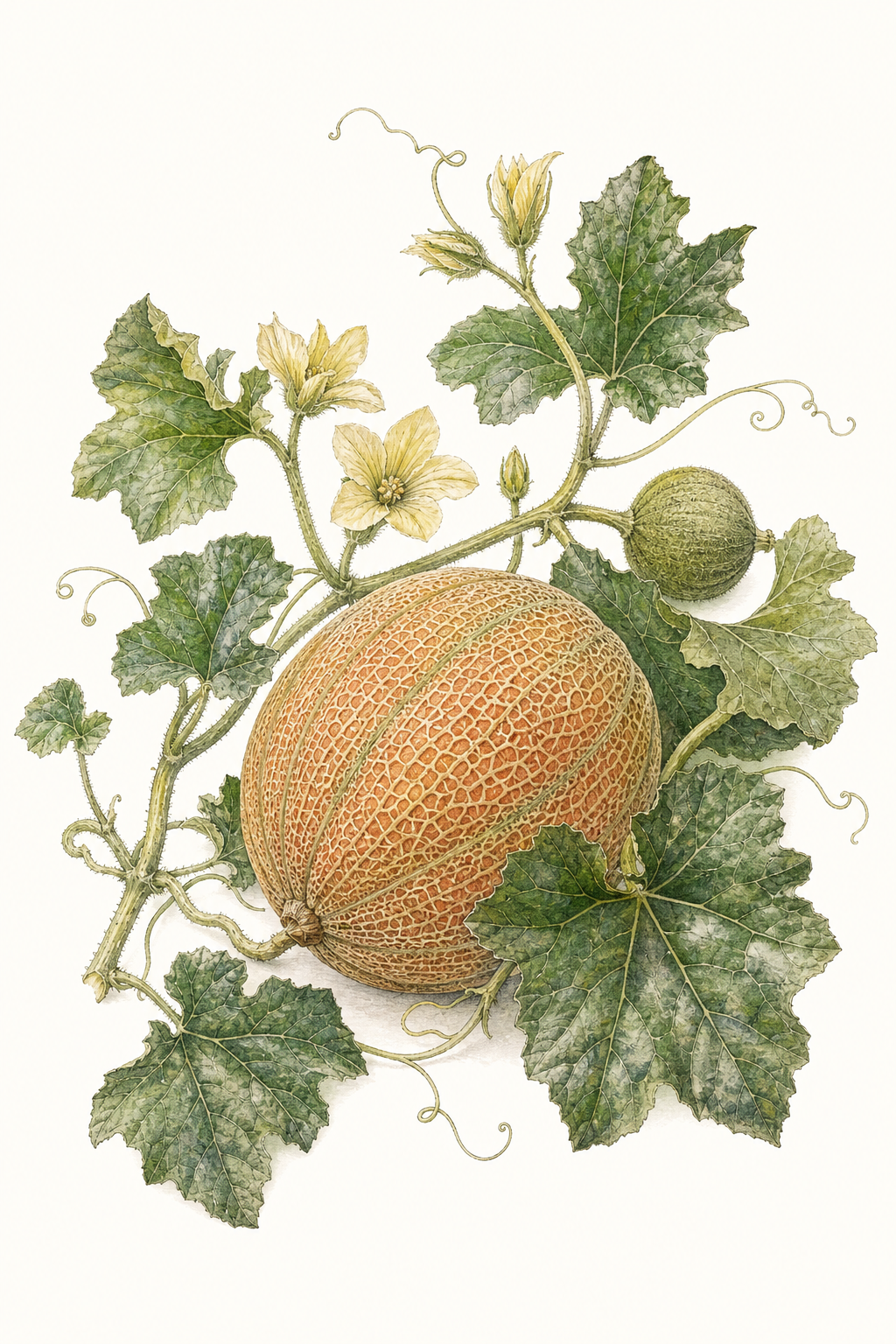
Sink your spoon into Eel River’s fragrant, honeyed flesh—vividly sweet with a lush, velvety melt and a bright, musky cantaloupe a…
Crop Dates
| Milestone | Date |
|---|---|
| Start Indoors | May 18th |
| Last Frost | May 25th |
| Transplant / Sow Outdoors | Jun 1st |
| Harvest Begins | Aug 25th |
| Harvest Ends | Aug 29th |
Crop Details
| Trait | Value |
|---|---|
| Days to Maturity | 85 |
| Sun Requirements | Full Sun |
| Growth Habit | Vine |
| Support Needed | Trellis |
| Planting Depth | Normal |
| Germination Temp (°F) | 75 |
| Min Soil Temp (°F) | 65 |
| Min Night Temp (°F) | 55 |
| Harden Off (days) | 12 |
Recommended Companions
Frequently Asked Questions
What pest or disease is most common on Cucumis melo (Eel River melon), and how do I control it?
How often should I water Eel River melon during peak growth, and what soil moisture level should I keep?
How can I tell when my Eel River melon (Cucumis melo) is ready to harvest?
Sink your spoon into Eel River’s fragrant, honeyed flesh—vividly sweet with a lush, velvety melt and a bright, musky cantaloupe aroma. The fruit develops a classic cantaloupe silhouette with a warm, netted rind and an inviting interior texture that’s especially satisfying when enjoyed fresh. Grow Eel River for standout market-style melons that shine in fruit bowls, showcase beautifully at the table, and deliver a memorable, garden-to-plate sweetness.
Sowing Tips

Transplant Conditions
Wait until soil reaches 65°F and nights stay above 55°F before moving outdoors. Harden off for 12 days first.

Direct Sow Preferred
Sensitive roots — does not transplant well. If starting indoors, use biodegradable pots and disturb roots as little as possible when moving outdoors.
Expert Note

For cantaloupe, warm the soil well and protect from cold nights—good soil warmth at transplant time matters more than early start dates.