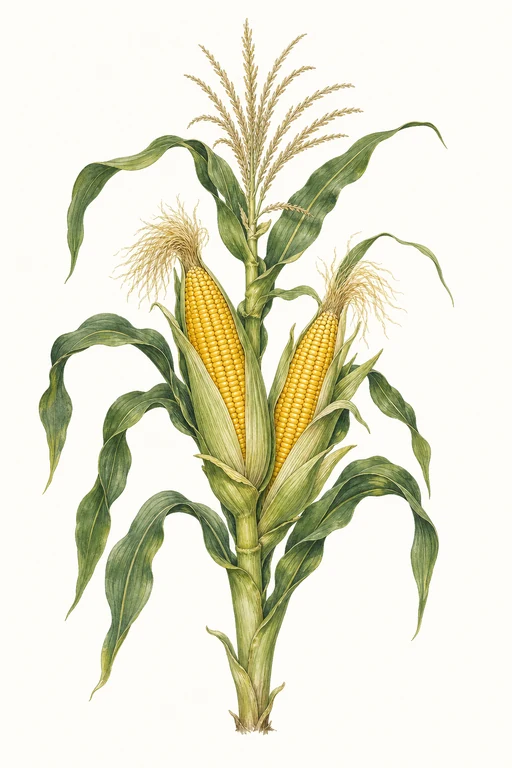
Golden Bantam
Corn
🌱 75d to harvest
Upright
Sun-warmed kernels burst with a buttery, honeyed sweetness—Golden Bantam is the kind of yellow sweet corn that feels luminous in …
Crop Dates
| Milestone | Date |
|---|---|
| Start Indoors | Direct Sow |
| Last Frost | May 25th |
| Transplant / Sow Outdoors | May 25th |
| Harvest Begins | Aug 8th |
| Harvest Ends | Aug 29th |
Crop Details
| Trait | Value |
|---|---|
| Days to Maturity | 75 |
| Sun Requirements | Full Sun |
| Growth Habit | Upright |
| Support Needed | None |
| Planting Depth | Normal |
| Germination Temp (°F) | 60 |
| Min Soil Temp (°F) | 60 |
| Min Night Temp (°F) | 28 |
| Harden Off (days) | Not Required |
Recommended Companions
Frequently Asked Questions
What’s a common pest or disease issue for sweet corn (Zea mays var. saccharata) and how do I control it?
Watch for corn earworm and fall armyworm, which bore into developing ears and leave frass near the tips. Use Bt (Bacillus thuringiensis) products when caterpillars are small, and inspect ears every few days so you can treat early. If you see widespread damage, rotate out of corn/grass relatives next season and remove husk debris to reduce overwintering sites.
How often should I water golden bantam sweet corn during the main growing phase?
During the rapid growth period and especially after tassels appear, keep the root zone evenly moist with about 1–1.5 inches of water per week (more in heat). Water deeply 1–2 times per week rather than frequent light sprinkling, and aim soil moisture so it stays damp 4–6 inches down. Letting the soil dry out during ear development can cause poor ear fill and tough, underdeveloped kernels.
How can I tell when Golden Bantam sweet corn is ready to harvest?
Harvest about 70–75 days after planting when the silks on the ears have browned and pulled back, but the ear kernels still look plump. Do the “milk test”: press a kernel—if it releases milky fluid, it’s ready; if it’s watery or not milky, give it a few days. Pick in the morning and shuck immediately for best sweetness, because sugars decline quickly after harvest.