
Juan Canary
Melon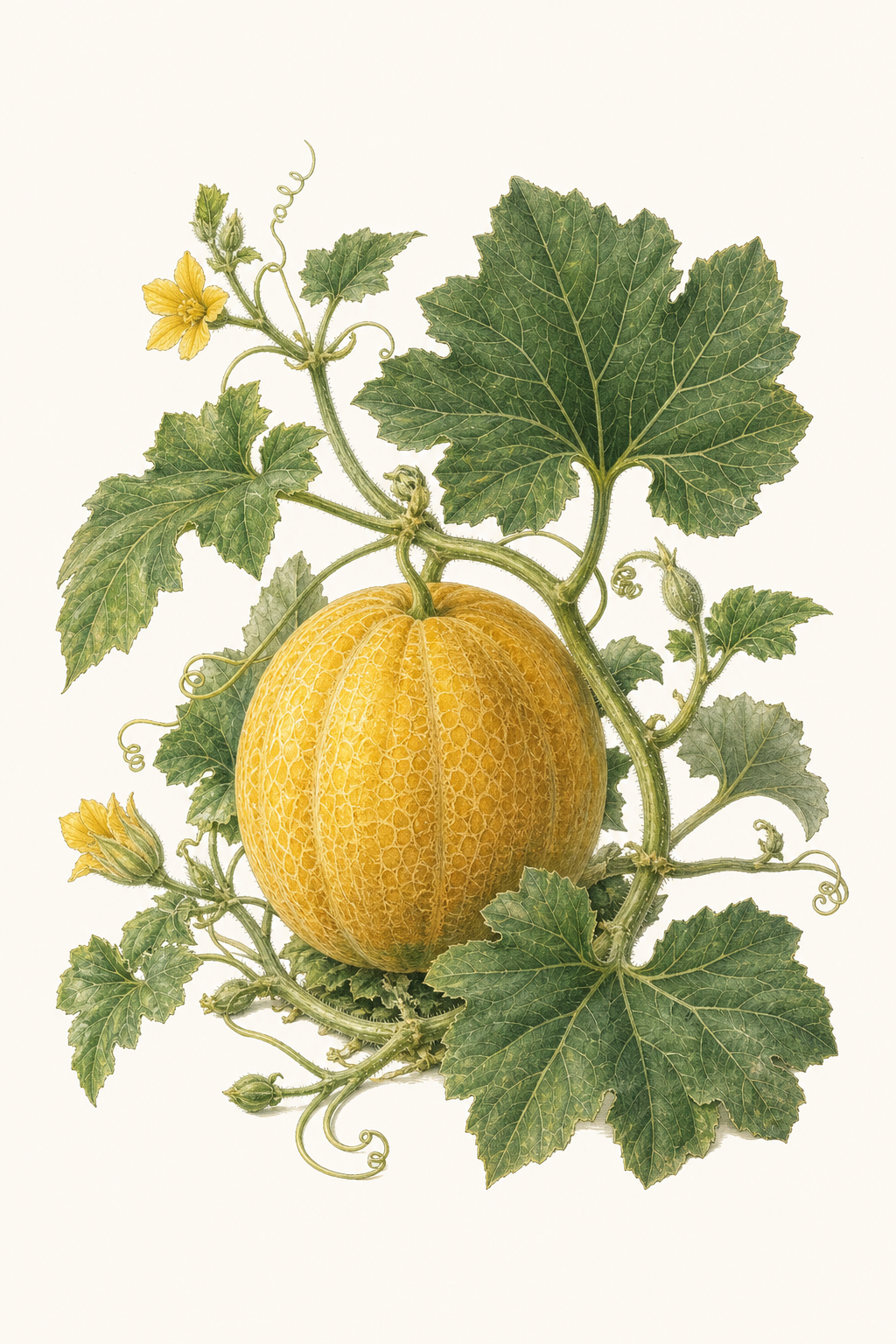
Sun-warmed fragrance leads the way with Juan Canary—an exceptionally sweet canary melon that ripens to a luminous golden hue and …
Crop Dates
| Milestone | Date |
|---|---|
| Start Indoors | May 18th |
| Last Frost | May 25th |
| Transplant / Sow Outdoors | Jun 1st |
| Harvest Begins | Sep 4th |
| Harvest Ends | Aug 29th |
Crop Details
| Trait | Value |
|---|---|
| Days to Maturity | 95 |
| Sun Requirements | Full Sun |
| Growth Habit | Vine |
| Support Needed | Trellis |
| Planting Depth | Normal |
| Germination Temp (°F) | 75 |
| Min Soil Temp (°F) | 65 |
| Min Night Temp (°F) | 55 |
| Harden Off (days) | 12 |
Recommended Companions
Frequently Asked Questions
What pest or disease commonly affects Cucumis melo (Juan Canary melons), and how can I control it at home?
How often should I water Juan Canary melon during the main growing phase, and what soil moisture level should I aim for?
How do I tell when Juan Canary melon (Cucumis melo) is ready to harvest?
Sun-warmed fragrance leads the way with Juan Canary—an exceptionally sweet canary melon that ripens to a luminous golden hue and fills the garden air with honeyed perfume. The flesh is tender and succulent, with a smooth, velvety bite and a rich, aromatic flavor that shines at its peak. Grow Juan Canary for standout fresh slices and showy fruit that also performs beautifully for preserves and bright, fragrant sauces.
Sowing Tips

Transplant Conditions
Wait until soil reaches 65°F and nights stay above 55°F before moving outdoors. Harden off for 12 days first.

Direct Sow Preferred
Sensitive roots — does not transplant well. If starting indoors, use biodegradable pots and disturb roots as little as possible when moving outdoors.
Expert Note

For best sweetness and storage life, grow in full sun with consistent watering early, then taper water as the fruit ripens.