
Noir des Carmes
Cantaloupe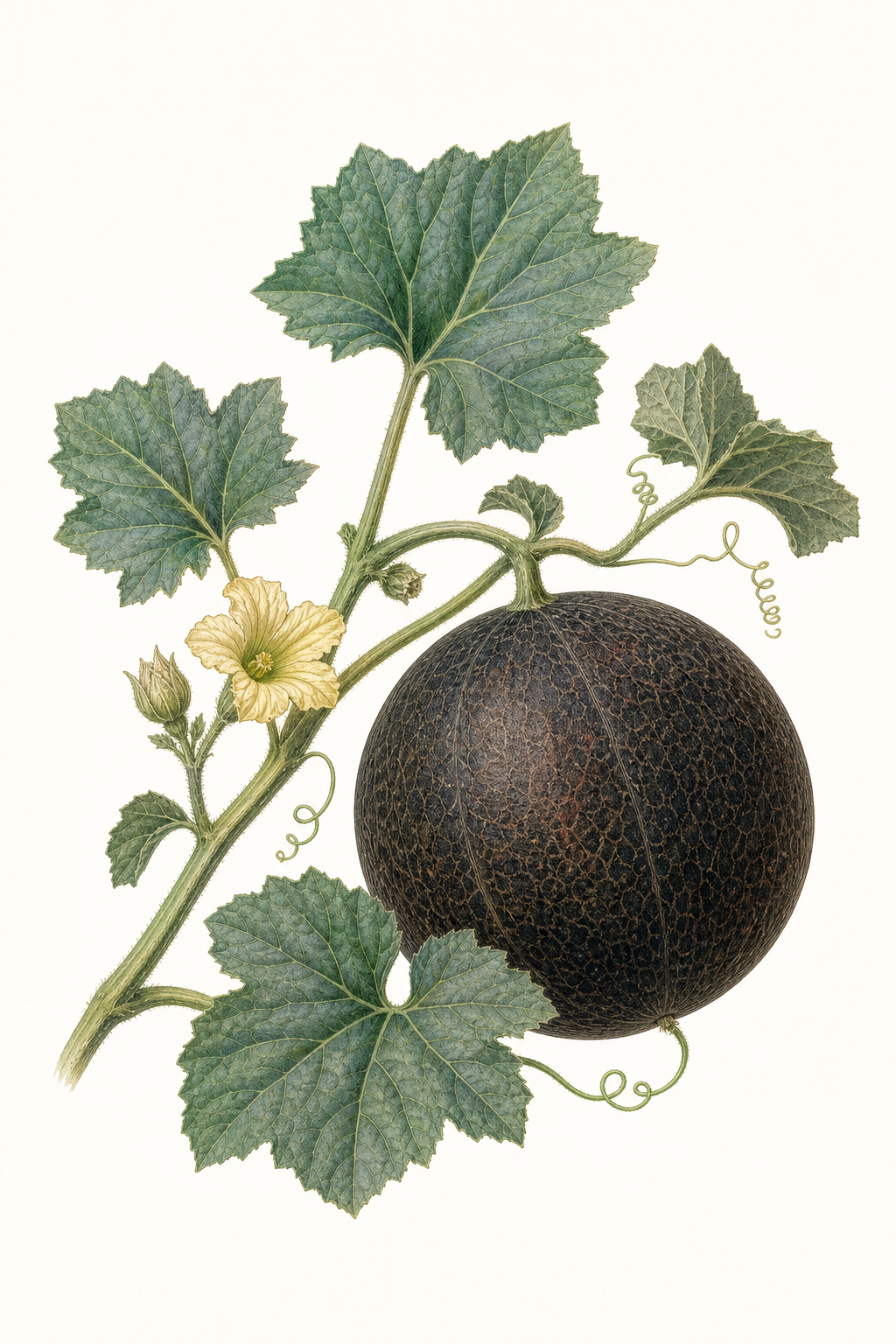
Sink your spoon into Noir des Carmes and discover a richly perfumed, honeyed sweetness wrapped in a velvety, fine-textured flesh.…
Crop Dates
| Milestone | Date |
|---|---|
| Start Indoors | May 18th |
| Last Frost | May 25th |
| Transplant / Sow Outdoors | Jun 1st |
| Harvest Begins | Aug 20th |
| Harvest Ends | Aug 29th |
Crop Details
| Trait | Value |
|---|---|
| Days to Maturity | 80 |
| Sun Requirements | Full Sun |
| Growth Habit | Vine |
| Support Needed | Trellis |
| Planting Depth | Normal |
| Germination Temp (°F) | 75 |
| Min Soil Temp (°F) | 65 |
| Min Night Temp (°F) | 55 |
| Harden Off (days) | 12 |
Recommended Companions
Frequently Asked Questions
Why are my Cucumis melo (Noir des Carmes) leaves turning mottled and silvery—what pest or disease is this and how do I stop it?
How often should I water Noir des Carmes melons during the main growing phase to avoid splitting or poor fruit set?
How can I tell when Noir des Carmes (Cucumis melo) is ready to harvest at ~80 days?
Sink your spoon into Noir des Carmes and discover a richly perfumed, honeyed sweetness wrapped in a velvety, fine-textured flesh. This cantaloupe ripens to a deep, dramatic rind presence—darkly shaded and elegantly mottled—while the interior stays tender and aromatic, ideal for savoring at peak ripeness. Grow it for a cool-season garden highlight that delivers bold flavor and a lush, spoonable bite for fruit-forward bowls, refreshing drinks, and showy fruit salads.
Sowing Tips

Transplant Conditions
Wait until soil reaches 65°F and nights stay above 55°F before moving outdoors. Harden off for 12 days first.

Direct Sow Preferred
Sensitive roots — does not transplant well. If starting indoors, use biodegradable pots and disturb roots as little as possible when moving outdoors.
Expert Note

For the sweetest fruit, wait until soil is at least ~70°F and keep plants evenly watered after flowering—underwatering during fruit set reduces sweetness.