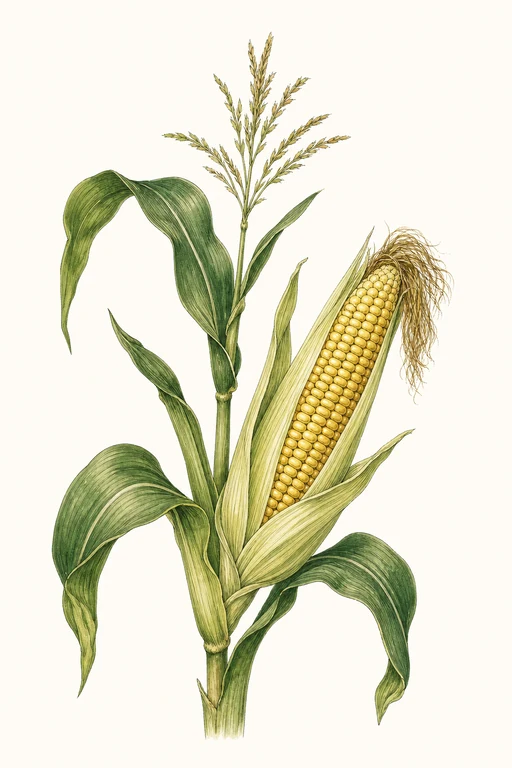
Rainbow Corn
Corn
🌱 75d to harvest
Upright
Sunlit kernels in a living spectrum—creamy gold, rosy blush, and cool blue-green—glow along each Rainbow Corn ear with a satin sh…
Crop Dates
| Milestone | Date |
|---|---|
| Start Indoors | Direct Sow |
| Last Frost | May 25th |
| Transplant / Sow Outdoors | May 25th |
| Harvest Begins | Aug 8th |
| Harvest Ends | Aug 29th |
Crop Details
| Trait | Value |
|---|---|
| Days to Maturity | 75 |
| Sun Requirements | Full Sun |
| Growth Habit | Upright |
| Support Needed | None |
| Planting Depth | Normal |
| Germination Temp (°F) | 60 |
| Min Soil Temp (°F) | 55 |
| Min Night Temp (°F) | 50 |
| Harden Off (days) | Not Required |
Recommended Companions
Frequently Asked Questions
What pests or diseases commonly hit sweet corn (Zea mays var. saccharata), and what can I do right away?
Corn earworm and fall armyworm are common and usually show up as holes in ear tips with frass. Check ears every 2–3 days once silks emerge and remove heavily infested ears early; for protection, use a Bt corn spray when silks are actively growing (follow the label) and keep weeds down around the bed. Watch for fungal leaf blights and rust; if you see spreading leaf spotting, improve airflow by thinning to the recommended spacing and avoid overhead watering.
How often should I water rainbow sweet corn during the main growing phase (tasseling to ear fill)?
From about tassel emergence through ear fill, keep soil consistently moist—typically 1–1.5 inches (2.5–3.8 cm) per week, split into 2–3 waterings to prevent drying between. Water deeply so moisture reaches the rooting zone, and stop light “sprinkling” that only wets the surface. If soil dries enough for leaves to wilt in the afternoon, water immediately to protect ear development.
How can I tell when rainbow sweet corn is ready to harvest?
Harvest when silks turn brown and dry, and kernels release a milky juice when you press them—this is the best sweet-corn indicator. Each ear is usually ready about 18–22 days after the first silks appear, but check the earliest-developed ears first. For peak sweetness, plan to harvest the same day you’ll eat or refrigerate immediately after picking.