
Stripetti
Spaghetti Squash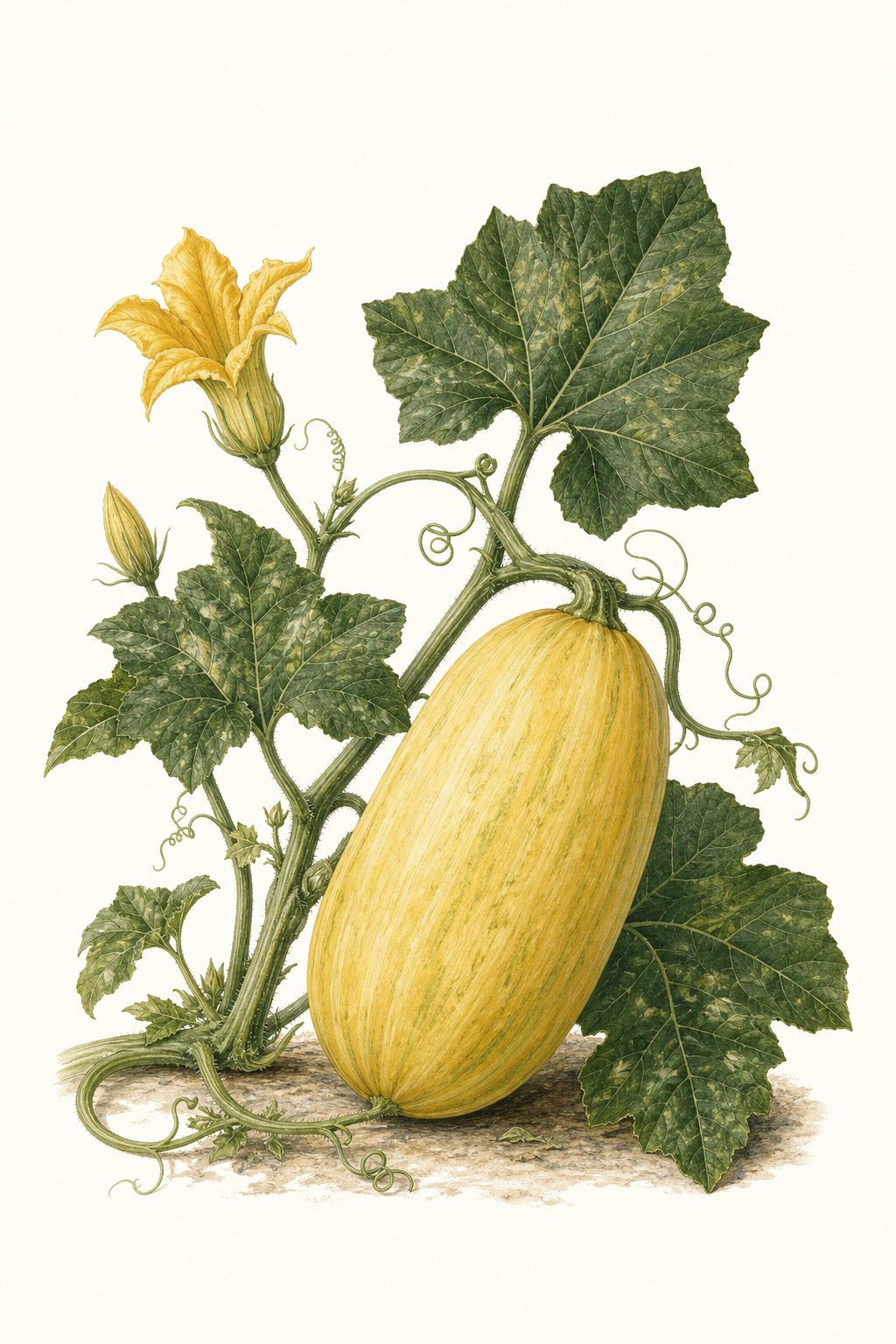
Savor the first sight of Stripetti’s long, golden strands—tender, springy, and delicately sweet when the flesh is teased into sil…
Crop Dates
| Milestone | Date |
|---|---|
| Start Indoors | May 18th |
| Last Frost | May 25th |
| Transplant / Sow Outdoors | Jun 1st |
| Harvest Begins | Aug 30th |
| Harvest Ends | Aug 29th |
Crop Details
| Trait | Value |
|---|---|
| Days to Maturity | 90 |
| Sun Requirements | Full Sun |
| Growth Habit | Vine |
| Support Needed | Trellis |
| Planting Depth | Normal |
| Germination Temp (°F) | 75 |
| Min Soil Temp (°F) | 65 |
| Min Night Temp (°F) | 55 |
| Harden Off (days) | 10 |
Recommended Companions
Frequently Asked Questions
Why are the leaves of my stripetti (Cucurbita pepo) turning yellow and getting powdery or mottled, and what can I do?
How often should I water stripetti during the main growing phase so the vines set and fill?
When is stripetti ready to harvest (Cucurbita pepo), and how do I tell?
Savor the first sight of Stripetti’s long, golden strands—tender, springy, and delicately sweet when the flesh is teased into silky ribbons. This 90-day spaghetti squash forms a handsome, oblong fruit with a warm butter-yellow interior that separates into fine, noodle-like strands, ideal for turning into hearty, comforting dishes and for spooning into savory sauces. Grow it for its satisfying texture and dependable winter-storage performance, a true garden-to-table centerpiece from late summer through the season’s end.
Sowing Tips

Transplant Conditions
Wait until soil reaches 65°F and nights stay above 55°F before moving outdoors. Harden off for 10 days first.

Direct Sow Preferred
Sensitive roots — does not transplant well. If starting indoors, use biodegradable pots and disturb roots as little as possible when moving outdoors.
Expert Note

Warm up the soil (and consider black plastic) before transplanting, then give it lots of space—vine squashes don’t tolerate being crowded.