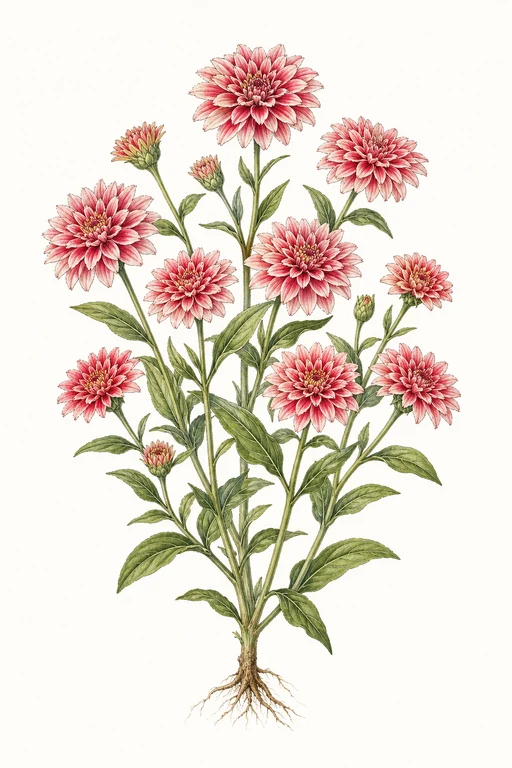
Zahara Starlight Rose
Zinnia
🌱 70d to harvest
Upright
Velvety petals unfurl in a starry rose pattern—each bloom a luminous blend of blush-pink and warm rose-red that seems to glow aga…
Crop Dates
| Milestone | Date |
|---|---|
| Start Indoors | Apr 27th |
| Last Frost | May 25th |
| Transplant / Sow Outdoors | May 18th |
| Harvest Begins | Jul 27th |
| Harvest Ends | Aug 29th |
Crop Details
| Trait | Value |
|---|---|
| Days to Maturity | 70 |
| Sun Requirements | Full Sun |
| Growth Habit | Upright |
| Support Needed | None |
| Planting Depth | Surface |
| Germination Temp (°F) | 70 |
| Min Soil Temp (°F) | 60 |
| Min Night Temp (°F) | 50 |
| Harden Off (days) | 7 |
Recommended Companions
Frequently Asked Questions
What pest or disease is most common on Zinnia elegans (Zahara Starlight Rose), and how do I treat it?
Zinnia elegans is often hit by powdery mildew and leaf spot, especially in humid weather or when foliage stays wet. At the first white powdery patches, remove the worst affected leaves and improve airflow, then spray with a labeled fungicide for powdery mildew and leaf spot (follow label rates). Avoid overhead watering and water at the base so the canopy dries quickly.
How often should I water Zinnia elegans during the main growing phase?
Water to keep the root zone evenly moist but not soggy: typically about 1 inch per week total during active growth, split into 1–2 deep waterings depending on heat and soil type. Let the top 1–2 inches of soil dry between waterings to prevent root stress and reduce fungal problems. During hot, dry spells in full sun, check daily and water when that top layer is dry to the touch.
How can I tell when Zahara Starlight Rose zinnias are ready to harvest?
Harvest when the flower heads are fully colored and open, with petals that look crisp (not shriveled or browning). For the longest vase life, cut blooms early in the morning just as they are at their best, and snip stems cleanly with sharp pruners. Expect peak harvest as plants reach about 70 days from sowing/establishment and continue producing with regular deadheading.