
Amrita Tulsi
Basil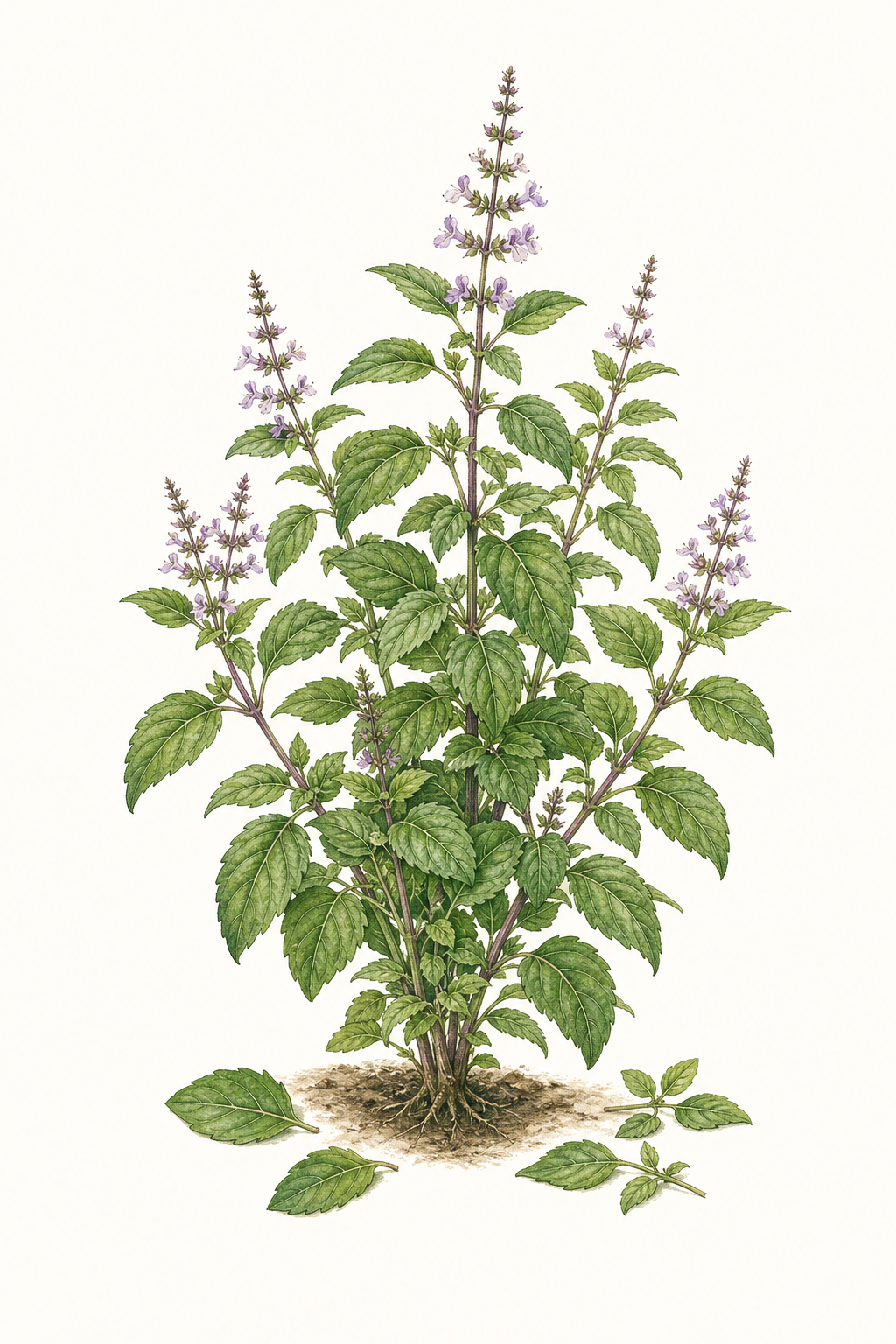
Fragrant as fresh rain on warm stone, Amrita Tulsi basil releases a luminous, sweet-spicy aroma with a cool herbal lift that ling…
Crop Dates
| Milestone | Date |
|---|---|
| Start Indoors | Apr 1st |
| Last Frost | May 13th |
| Transplant / Sow Outdoors | Jul 8th |
| Harvest Begins | Sep 6th |
| Harvest Ends | Sep 27th |
Crop Details
| Trait | Value |
|---|---|
| Days to Maturity | 60 |
| Sun Requirements | Full Sun |
| Growth Habit | Upright |
| Support Needed | None |
| Planting Depth | Normal |
| Germination Temp (°F) | 75 |
| Min Soil Temp (°F) | 60 |
| Min Night Temp (°F) | 50 |
| Harden Off (days) | 10 |
Recommended Companions
Frequently Asked Questions
What should I do if Amrita Tulsi develops leaf spots or a fuzzy gray mold on leaves?
How often should I water Amrita Tulsi during the main growing phase?
How can I tell when Amrita Tulsi is ready to harvest (around day 60)?
Fragrant as fresh rain on warm stone, Amrita Tulsi basil releases a luminous, sweet-spicy aroma with a cool herbal lift that lingers on the fingertips. Its leaves form dense, upright clumps of tender, medium-green foliage with a softly serrated edge and a succulent, velvety texture—ideal for gathering again and again. Grow Amrita Tulsi for its revered presence in home herbal rituals and for aromatic infusions and flavorful finishing where holy basil character shines most.
Sowing Tips

Transplant Conditions
Wait until soil reaches 60°F and nights stay above 50°F before moving outdoors. Harden off for 10 days first.
Expert Note

Start holy basil indoors for stronger early growth, then transplant only after nights stay warm to prevent stunting.