
Caserta
Zucchini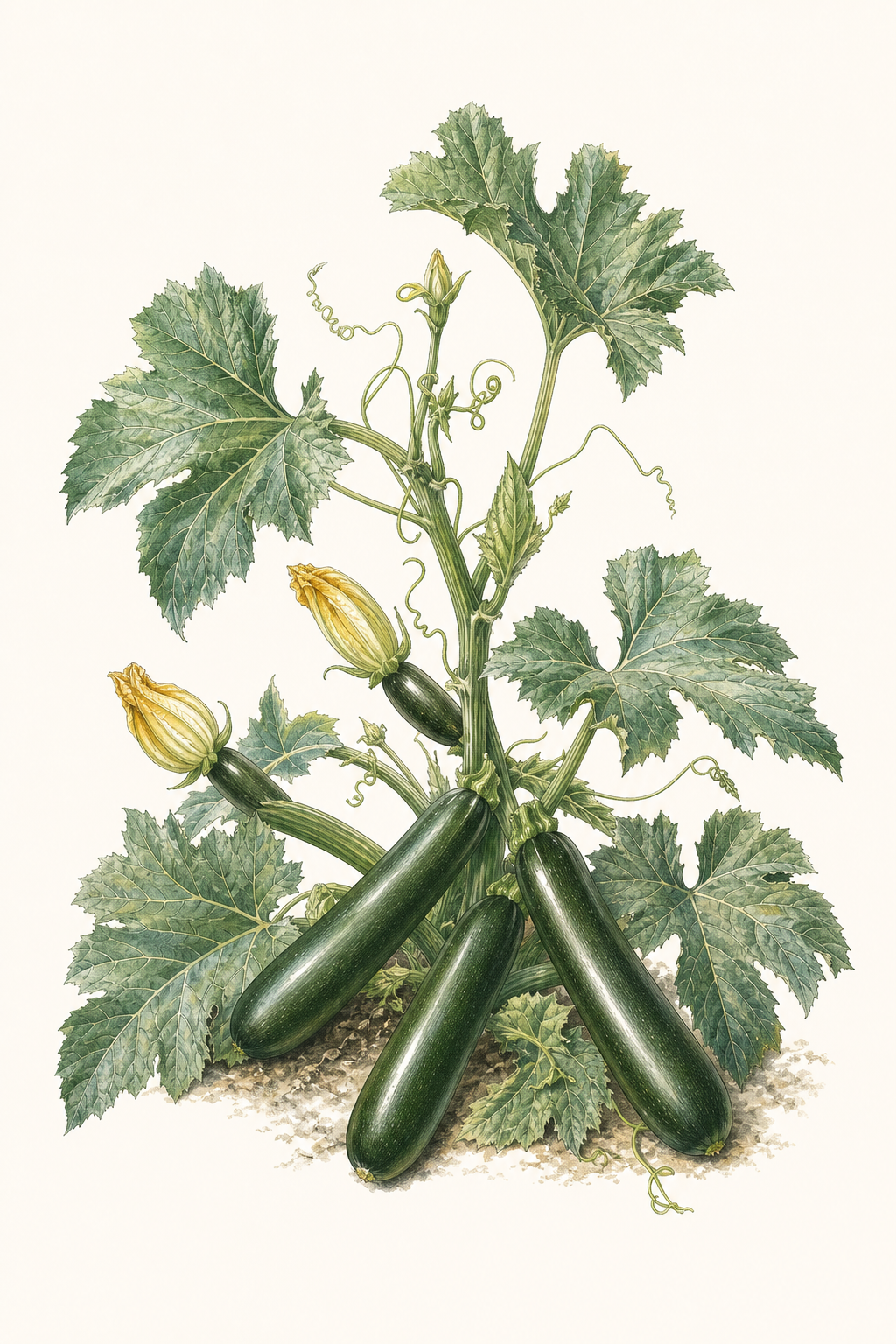
Tender and luminous when young, Caserta zucchini offers a sweet, garden-fresh flavor with a crisp, lightly creamy bite and a smoo…
Crop Dates
| Milestone | Date |
|---|---|
| Start Indoors | May 27th |
| Last Frost | May 13th |
| Transplant / Sow Outdoors | Jun 10th |
| Harvest Begins | Jul 25th |
| Harvest Ends | Sep 27th |
Crop Details
| Trait | Value |
|---|---|
| Days to Maturity | 45 |
| Sun Requirements | Full Sun |
| Growth Habit | Vine |
| Support Needed | Trellis |
| Planting Depth | Normal |
| Germination Temp (°F) | 70 |
| Min Soil Temp (°F) | 65 |
| Min Night Temp (°F) | 55 |
| Harden Off (days) | 10 |
Recommended Companions
Frequently Asked Questions
What pest or disease most often affects Cucurbita pepo (zucchini/Caserta), and how can I stop it?
How often should I water Caserta zucchini during its main growing phase?
How do I tell when Caserta zucchini is ready to harvest?
Tender and luminous when young, Caserta zucchini offers a sweet, garden-fresh flavor with a crisp, lightly creamy bite and a smooth, dark-green skin that stays attractive at harvest. Its straight, uniform fruits are ideal for quick roasting and grilling, and they also shine in fresh preparations where their delicate texture and mild savoriness are front and center. Grow Caserta for reliable early performance and a steady stream of fruits that invite you to enjoy zucchini at its most vibrant stage.
Sowing Tips

Transplant Conditions
Wait until soil reaches 65°F and nights stay above 55°F before moving outdoors. Harden off for 10 days first.

Direct Sow Preferred
Sensitive roots — does not transplant well. If starting indoors, use biodegradable pots and disturb roots as little as possible when moving outdoors.
Expert Note

Start seeds only if you can keep roots undisturbed—zucchini transplants hate cold; wait for consistently warm nights before setting out.