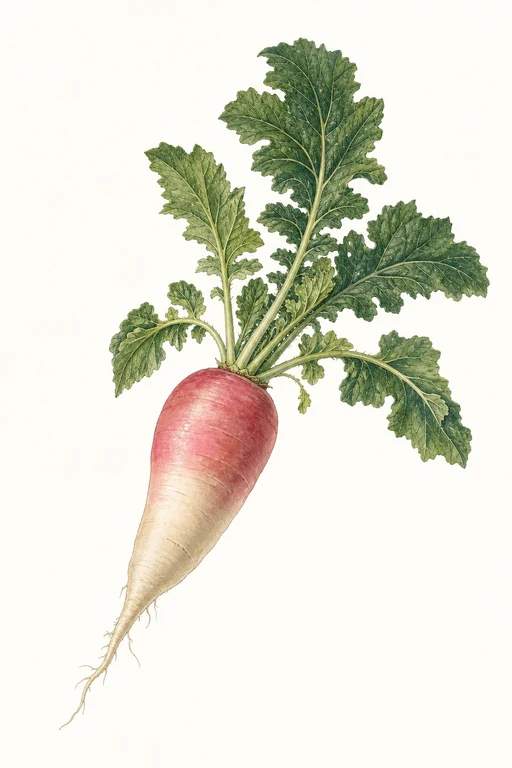
China Rose
Radish
🌱 55d to harvest
Taproot
Sink your senses into China Rose’s striking, rose-blushed roots—crisp, juicy flesh with a clean, gently peppery bite that lingers…
Crop Dates
| Milestone | Date |
|---|---|
| Start Indoors | Direct Sow |
| Last Frost | May 13th |
| Transplant / Sow Outdoors | May 13th |
| Harvest Begins | Jul 7th |
| Harvest Ends | Sep 27th |
Crop Details
| Trait | Value |
|---|---|
| Days to Maturity | 55 |
| Sun Requirements | Full Sun |
| Growth Habit | Taproot |
| Support Needed | None |
| Planting Depth | Normal |
| Germination Temp (°F) | 55 |
| Min Soil Temp (°F) | 40 |
| Min Night Temp (°F) | 28 |
| Harden Off (days) | Not Required |
Recommended Companions
Frequently Asked Questions
What pest or disease commonly affects Raphanus sativus (China Rose/radish), and what should I do?
Watch for flea beetles, which chew small holes in radish leaves and can stunt young plants. Use floating row cover immediately after sowing, and if needed apply an insecticidal soap early in the day for light infestations; keep weeds down to reduce habitat. Also prevent downy mildew and other leaf diseases by spacing plants for airflow and watering at the soil line rather than wetting foliage.
How often should I water Raphanus sativus during the main growing phase, and what soil moisture level do they need?
During the bulbing/growing phase (roughly weeks 2–6), keep the soil consistently evenly moist—aim for top few inches to never fully dry out. Water about 1 inch per week in total (more during hot, windy spells), split into 1–2 sessions so moisture penetrates rather than runs off. Fluctuating moisture can lead to woody, pithy roots and poor flavor.
How can I tell when China Rose (Raphanus sativus) is ready to harvest?
Harvest around 55 days from sowing, or sooner if roots reach the size you want. The tops will look more developed, and you should see the shoulder of the root just above the soil surface; gently pull one to check texture—good roots snap and feel firm, not soft or spongy. Don’t leave radishes in the ground too long after they size up, or they can become stronger-flavored and more likely to turn woody.