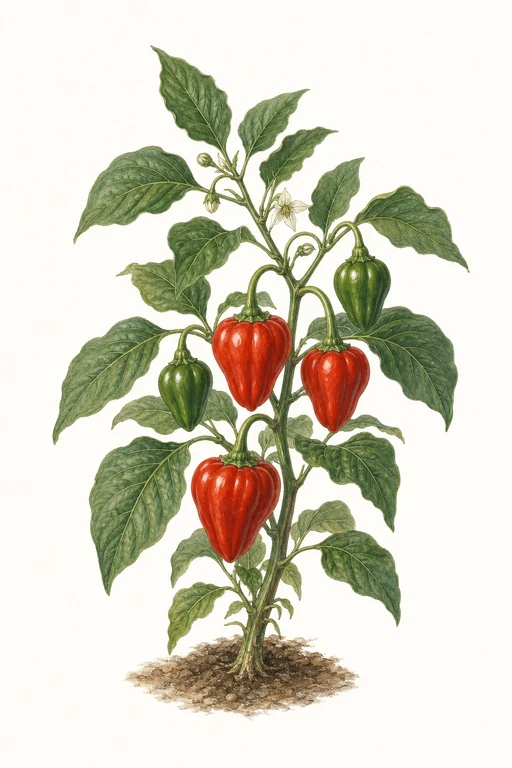
Corbaci
Pepper
🌱 90d to harvest
Upright
Sweet Frying Corbaci peppers arrive with a glossy, lantern-bright sheen and a crisp, juicy bite that turns beautifully tender whe…
Crop Dates
| Milestone | Date |
|---|---|
| Start Indoors | Mar 25th |
| Last Frost | May 13th |
| Transplant / Sow Outdoors | Jul 8th |
| Harvest Begins | Oct 6th |
| Harvest Ends | Sep 27th |
Crop Details
| Trait | Value |
|---|---|
| Days to Maturity | 90 |
| Sun Requirements | Full Sun |
| Growth Habit | Upright |
| Support Needed | Stake |
| Planting Depth | Normal |
| Germination Temp (°F) | 80 |
| Min Soil Temp (°F) | 60 |
| Min Night Temp (°F) | 50 |
| Harden Off (days) | 10 |
Recommended Companions
Frequently Asked Questions
What pest or disease commonly affects Capsicum annuum (Corbaci) and what should I do if I see it?
Watch for aphids and thrips, which can distort young Corbaci pepper leaves and spread viruses. Spray the undersides of leaves with insecticidal soap early in the morning, repeat every 5–7 days for 2–3 rounds, and remove heavily infested tips. If you see wilting with dark stem lesions, suspect bacterial/fungal stem problems—remove affected plants and avoid wetting foliage to slow spread.
How often should I water Corbaci peppers during the main growing phase?
During flowering and fruit set, keep soil evenly moist but not soggy—about 1–2 inches (2.5–5 cm) of water per week depending on heat and container size. Water deeply when the top 1 inch of soil dries, aiming at the base of the plant; peppers (Capsicum annuum) are sensitive to both drought stress and overwatering. Consistent moisture helps prevent blossom-end issues and keeps fruit from stalling.
How can I tell when Corbaci peppers are ready to harvest?
Harvest at 90 days to maturity, when pods are long, firm, and reach the expected size for Corbaci. For the classic sweet flavor, pick when fruits fully develop color (typically green to red depending on your target stage) and the skin is glossy. If you gently tug and the pepper releases with minimal resistance, it’s ready—leaving overripe peppers on too long can reduce new fruit set.